4000 SQFT | Mumbai
2024
PAVITRA RAJARAM & PAUL ABRAHAM
4000 SQFT | Mumbai
2024
PAVITRA RAJARAM & PAUL ABRAHAM
“The things we love have a way of finding each other”
According to an old English poem, a bride must start her married life wearing 'something old and something new, something borrowed and something blue'. These talismans represent her past and future selves, gathered with a prayer of the kind made on the eve of a grand adventure.
Like stepping over the threshold of a new home. For Pavitra, this scrap of Victorian lore has served as a way to organise the sometimes-inexplicable instincts involved in designing a home. How do you know this sculpture will go with that painting? When to contrast colours and when to harmonise? Are there any rules really about where you can put up a bookshelf? For decisions not guided by reason alone, there's a handy rhyme.
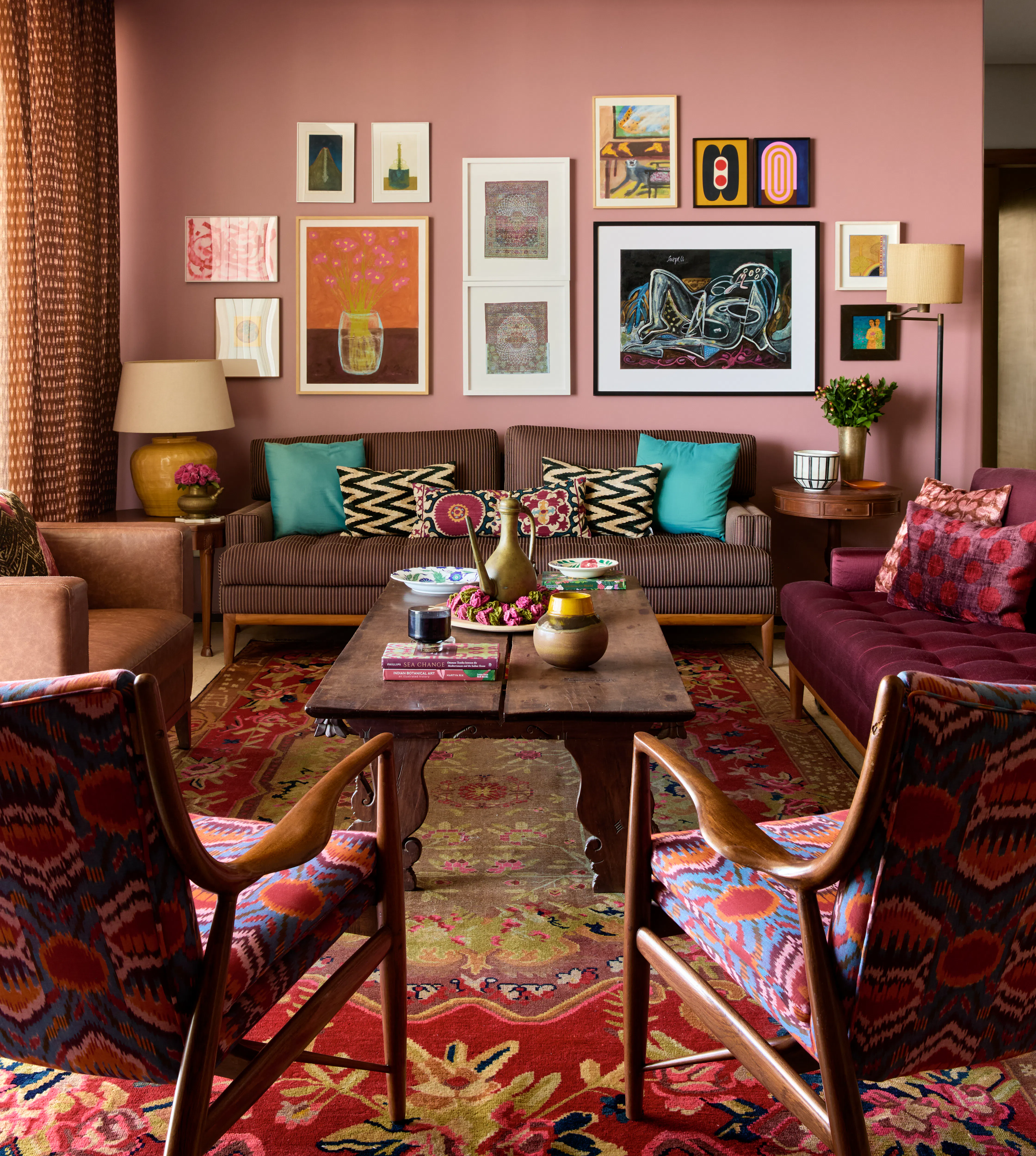
The paintings here showcase the interplay between the couple’s personal journeys with art collecting, as well as their shared love for styles like miniature art. Apart from canvases by the likes of FN Souza, Lubna Chowdhary and Manisha Gera Baswani, there’s genius represented here in other mediums too, like the Dokra bench by Suresh Waghmare (Baro Market), a papier mache sculpture by Dibin K Thilakan (Gallery OED) and a 100-year-old Khotan carpet (Siva Oriental).
Naturally, in the design of her own space, Pavitra engages enthusiastically with questions like these, and inspires even more. Buffeted all day by sea breeze, this high-rise Mumbai apartment is home to her and her husband Paul, their four sons, and their prodigious collections of art, textiles and books. Another flat in the complex has been transformed into a guest suite, where the couple frequently hosts artists, historians, wildlife conservationists and friends from different facets of their very full lives.
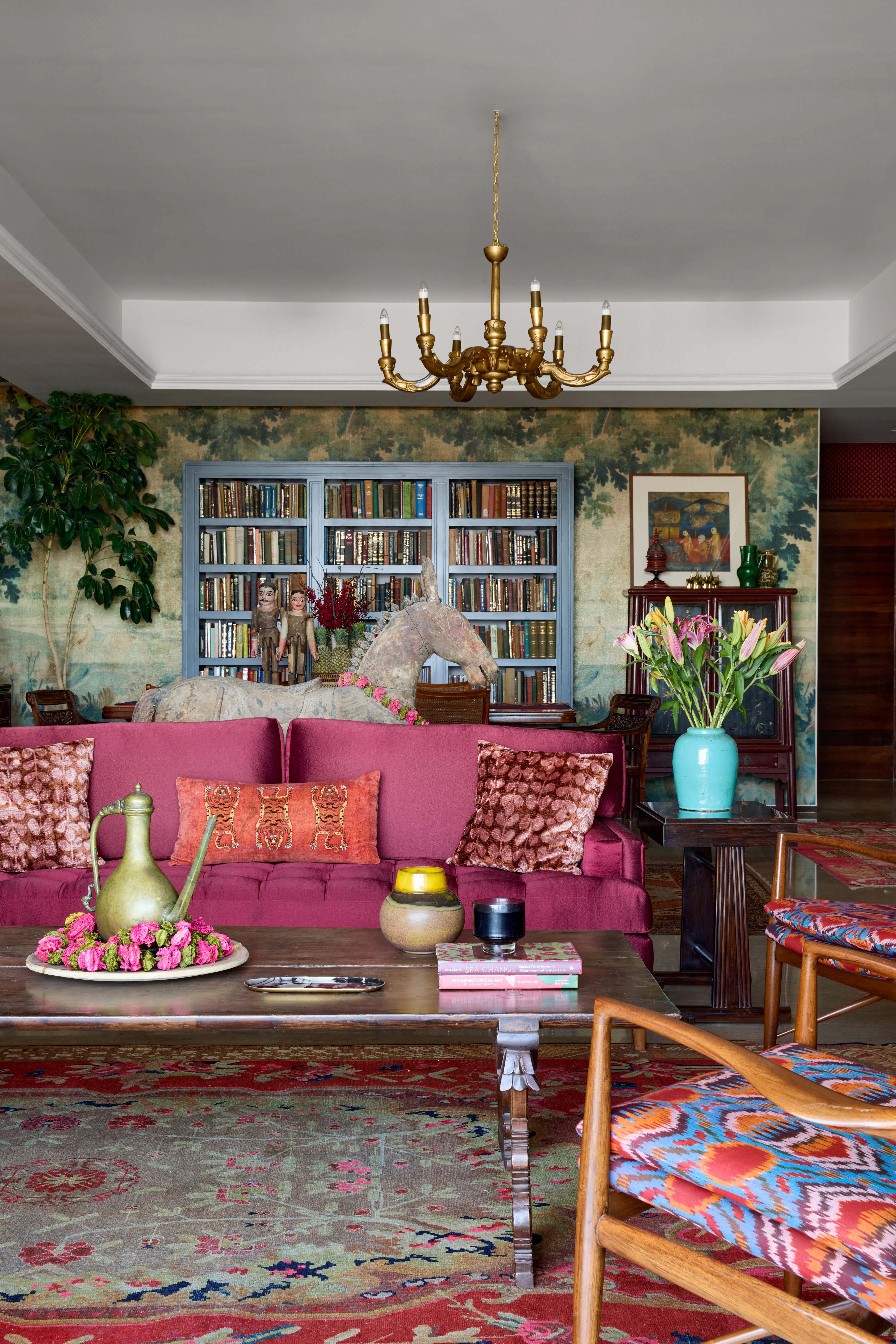
There’s evidence of Indian craft traditions everywhere you look. Of note in the living room are the wooden folk Bhuta horse (Philips Antiques), the Deccani cast-bronze aftaba or pitcher on the centre table (Pooranawalla), and chairs upholstered in ikat by the master-weaver Chandpasha of Crafting Plant.
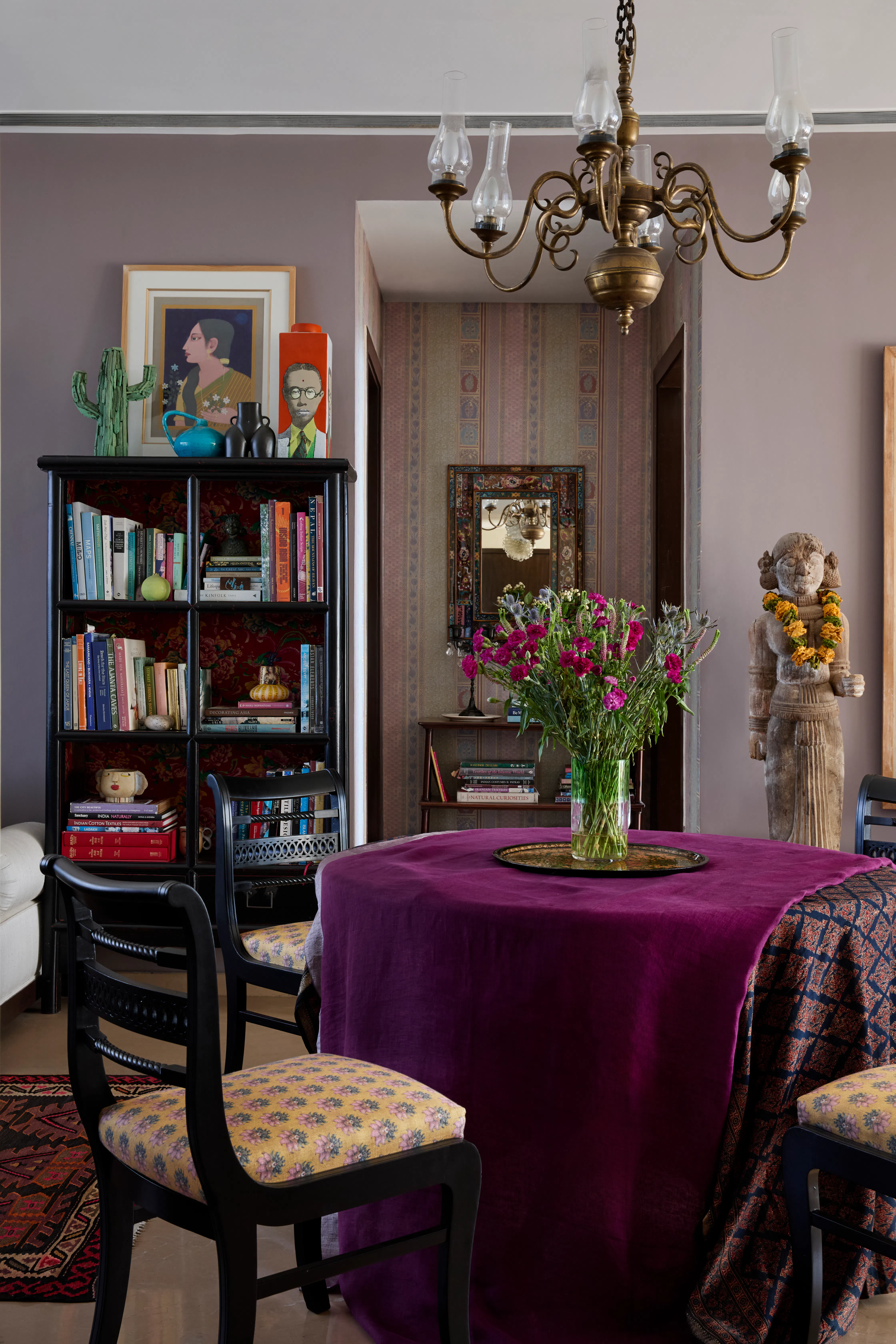
The guesthouse invites you to join the family at the table, which directly faces the entrance. Among the sights welcoming you are the brass Dutch chandelier from a Jakarta flea market, the painting Lady with Jasmine by Lalu Prasad Shaw on the bookshelf, and a wooden folk Bhuta statue of a woman (Philips Antiques).
Books, prints and textiles collected with love over decades speak of a shared devotion to history. The objective was to create a setting where Paul and Pavitra's individual and shared passions could find expression, but also interact in ways that tell new stories. A wall in the dining area, for instance, is dominated by a 19th-century mezzotint engraving of the fall of Tipu Sultan, its moody tones contrasted with the bright pop colours of a sculpture set right beside it.
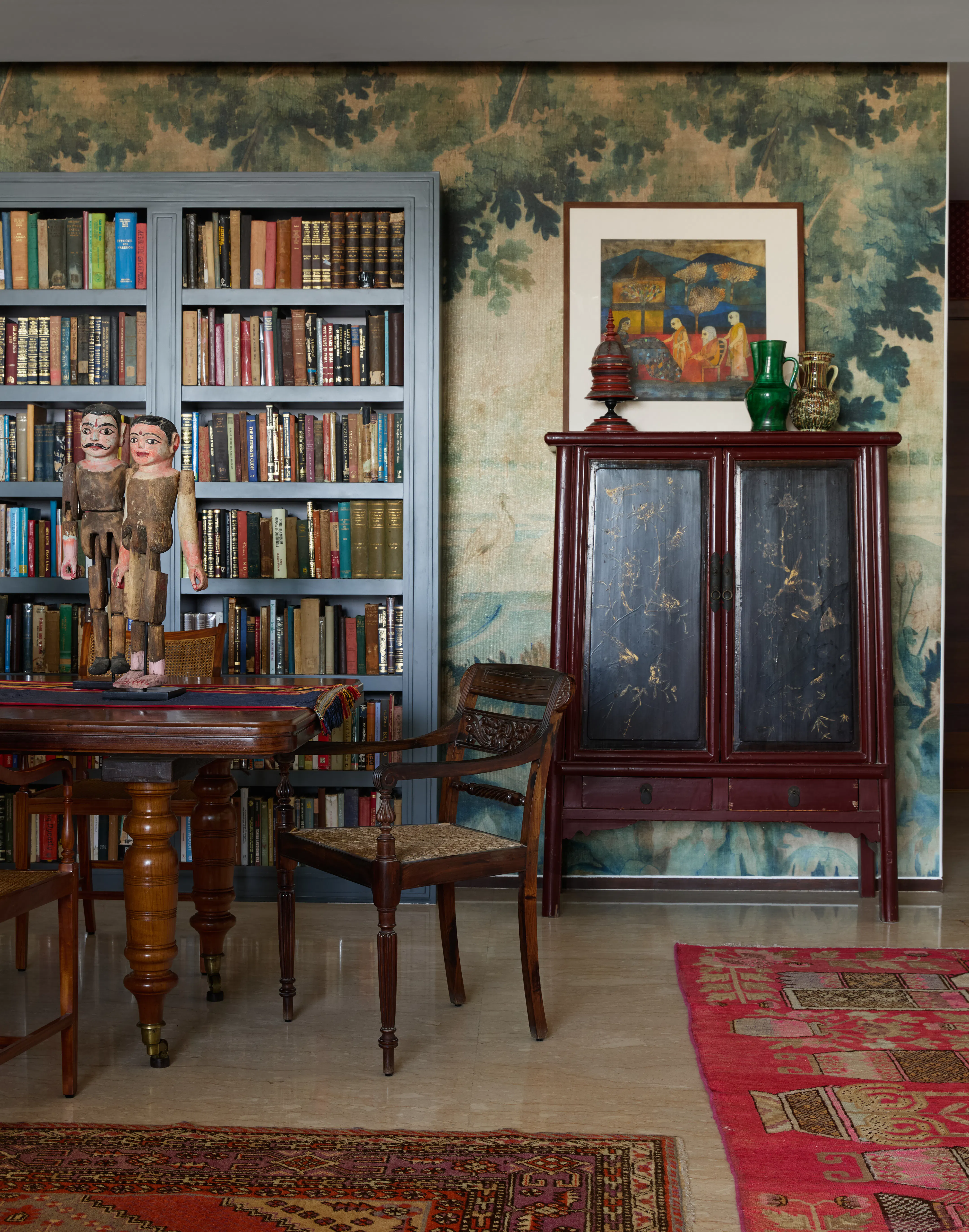
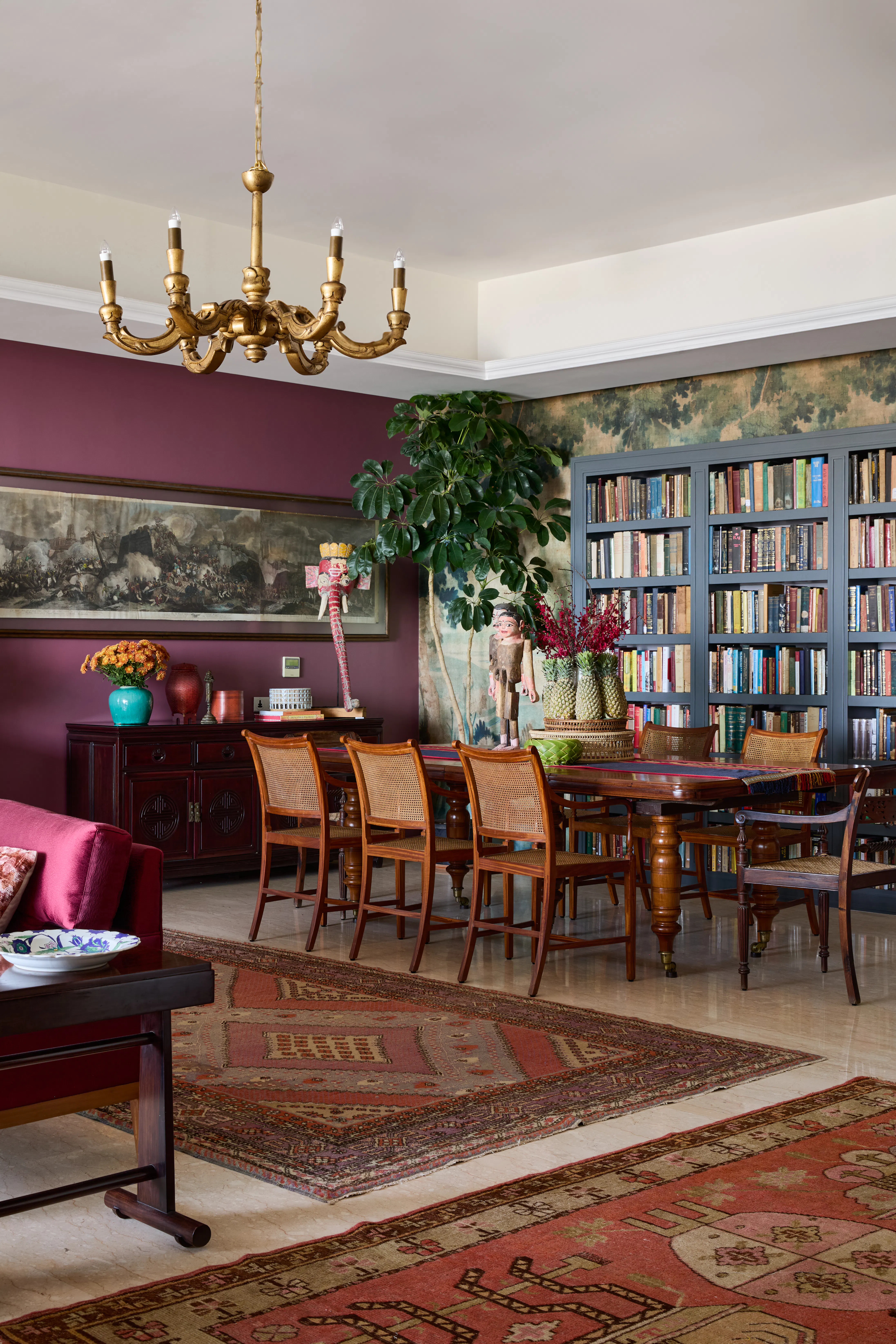
Pierre Frey's 'Au Bord du Lac' wallpaper gives the dining room a sepia-tinted glow, which perfectly sets off the hand-painted Chinese lacquer cupboard, the earthern-toned ceramic vases from Cocol, Madrid and the moody blue of Badri Narayan’s painting, Maya displaying her veil of many colours.
Warm notes make the dining room feel welcoming: the large teak dining table is surrounded with satin wood dining chairs (Pooranawalla, Mumbai), a vintage French wooden chandelier (Mahendra Doshi), and a classic Samarkand carpet, as well as a geometric Yarkhandi (Siva Oriental).
A prized part of Paul's collection of historical engravings, Storming of Seringapatanam by Sir Robert Ker Porter narrates a pivotal moment in the Subcontinent's history through the eyes of the outsider. The ceramic piece, on the other hand, is by one of Pavitra's favourite contemporary artists, the Sri Lankan sculptor Ramesh Mario Nithiyendran. By its simple juxtaposition with the 200-year-old engraving, the Yellow Spikey Figure offers a counter-narrative with its joyous, irreverent blending of global cultures.
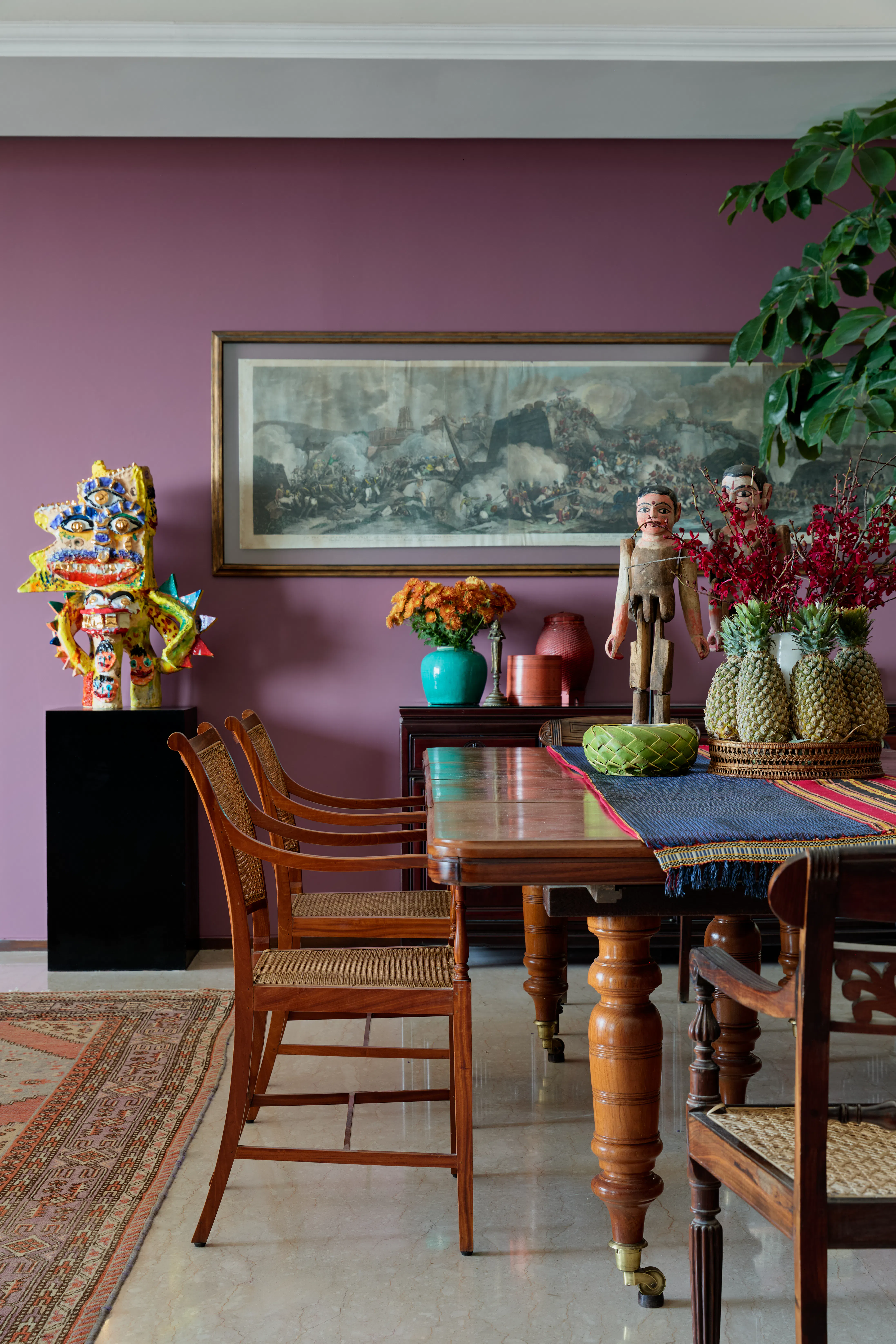
A silk Nigerian Yoruba men's shawl is used as an unusual and striking table runner. The wall colour—Chocolate Mauve from Asian Paints—makes an impression but cedes the foreground to the interplay between a historic 19th-century engraving of the fall of Tipu Sultan and a gloriously irreverent sculpture by contemporary Sri Lankan artist Ramesh Mario Nithiyendran.
As with all homes designed by PRD, there are moments of quiet delight that reveal themselves slowly: the way the evening sun slants into the den, illuminating the golden landscape of Jethro Buck’s Wild Things; a delicate fringe of fraying silk from a patch of upcycled jacquard on the ottoman; two shades of the same wall colour - Chocolate Mauve from Asian Paints - that gently transition you from dining to living area.
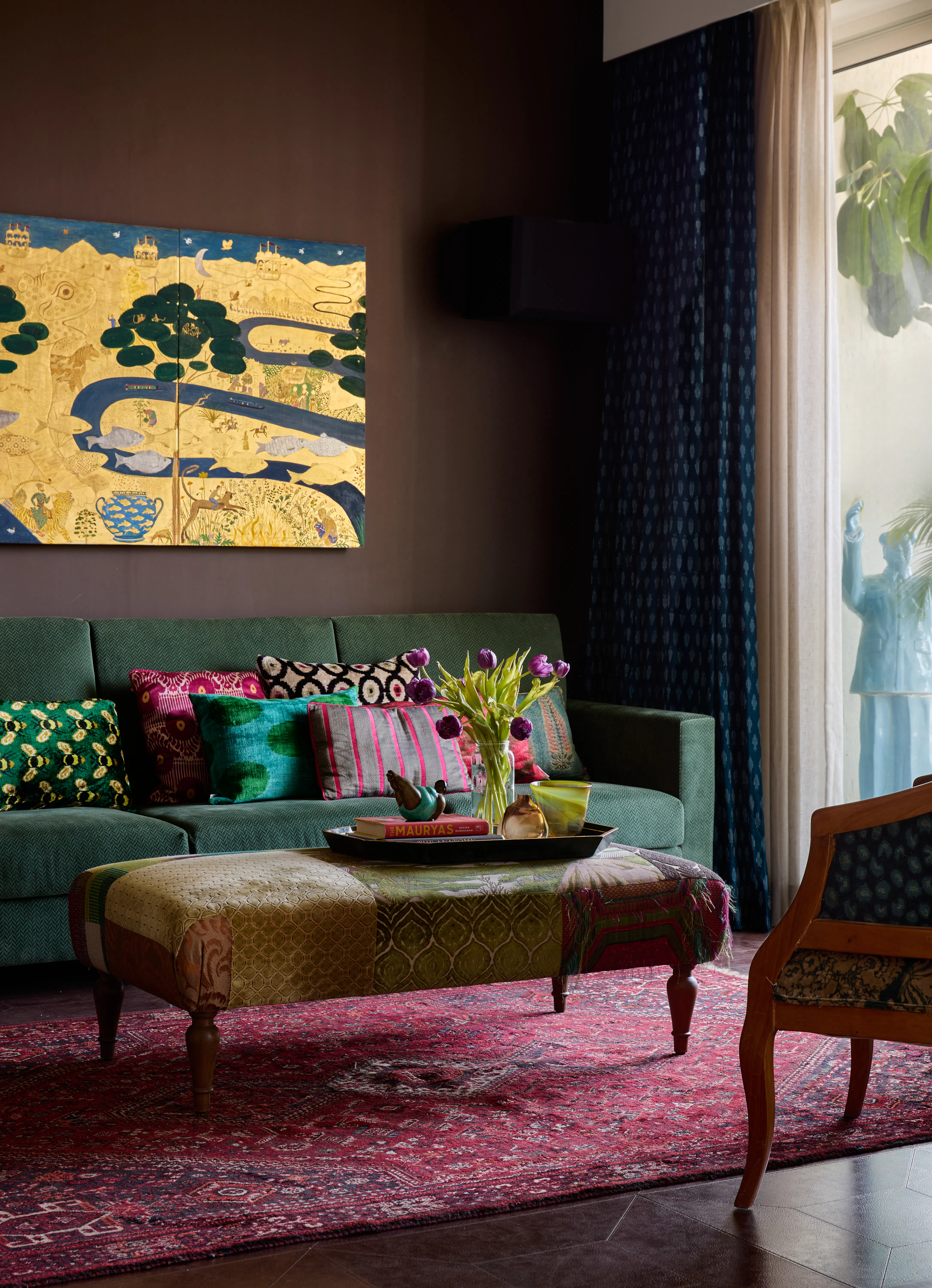
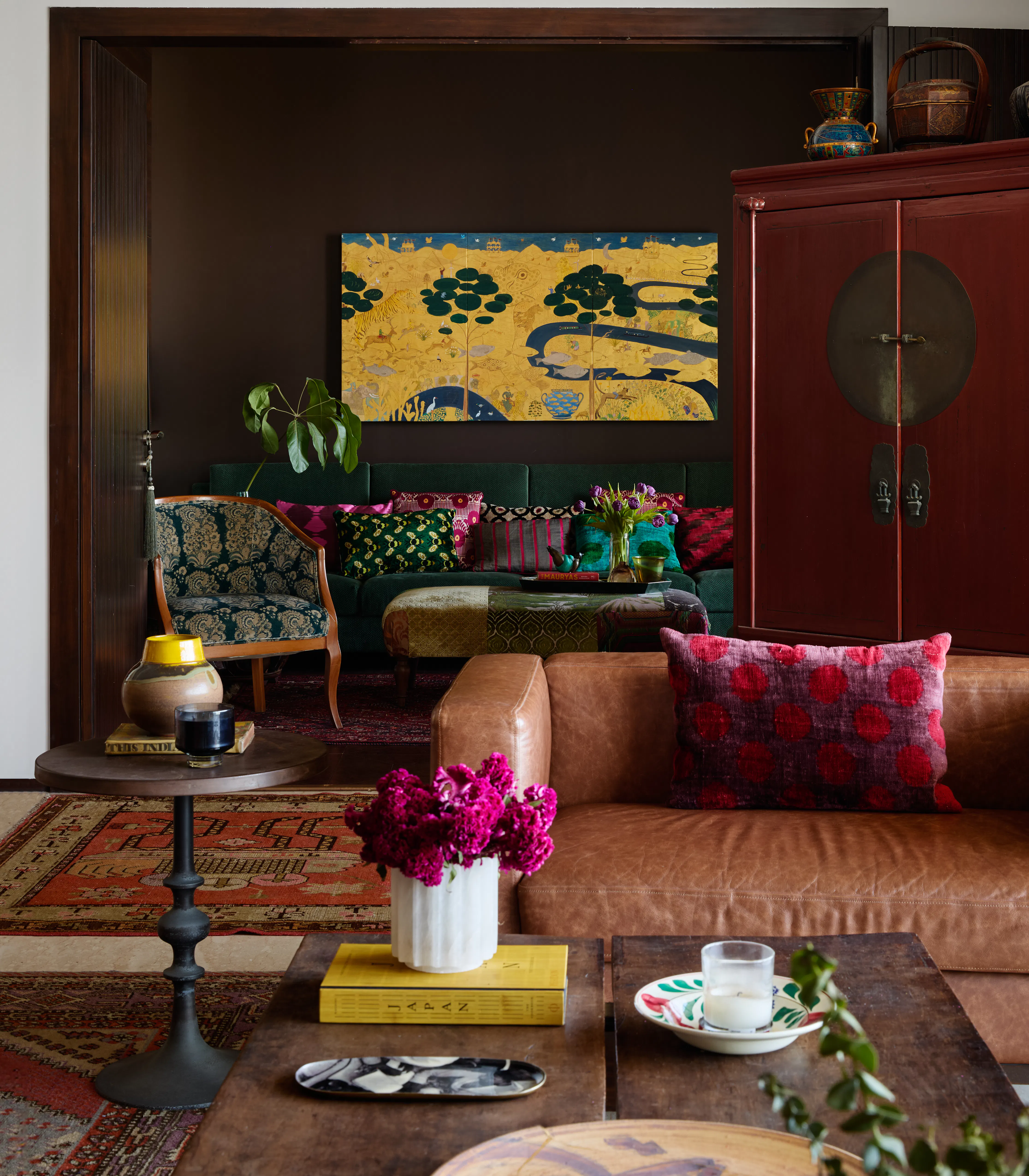
In the den, the rich warm wall colour (Havana Cigar from Asian Paints) complements the indigo sky of Jethro Buck’s painting, Wild Things, which is placed to catch the rays of the setting sun. Apart from the blown glass vases by Srila Mukherjee, the space also holds some very special custom PRD designs, including the ottoman with upcycled silk jacquard upholstery from the Katran collaboration and the sofa covered in the ‘Sikri spirulina’ fabric from Bharat Furnishings.
Paul's collection of modern masters and indigenous artists interact in unexpected ways with Pavitra's archive of contemporary work. The iconoclastic defiance of FN Souza finds resonance in the fierce feminism of Shakuntala Kulkarni; the dreamlike worlds of Badri Narayan seem akin to the fantastical realms of Rithika Merchant; the meditative still-lifes of KH Ara contrast with the intricate, hypnotic panels of Gopa Trivedi's miniatures. These connections are not planned, but spring organically throughout the home.
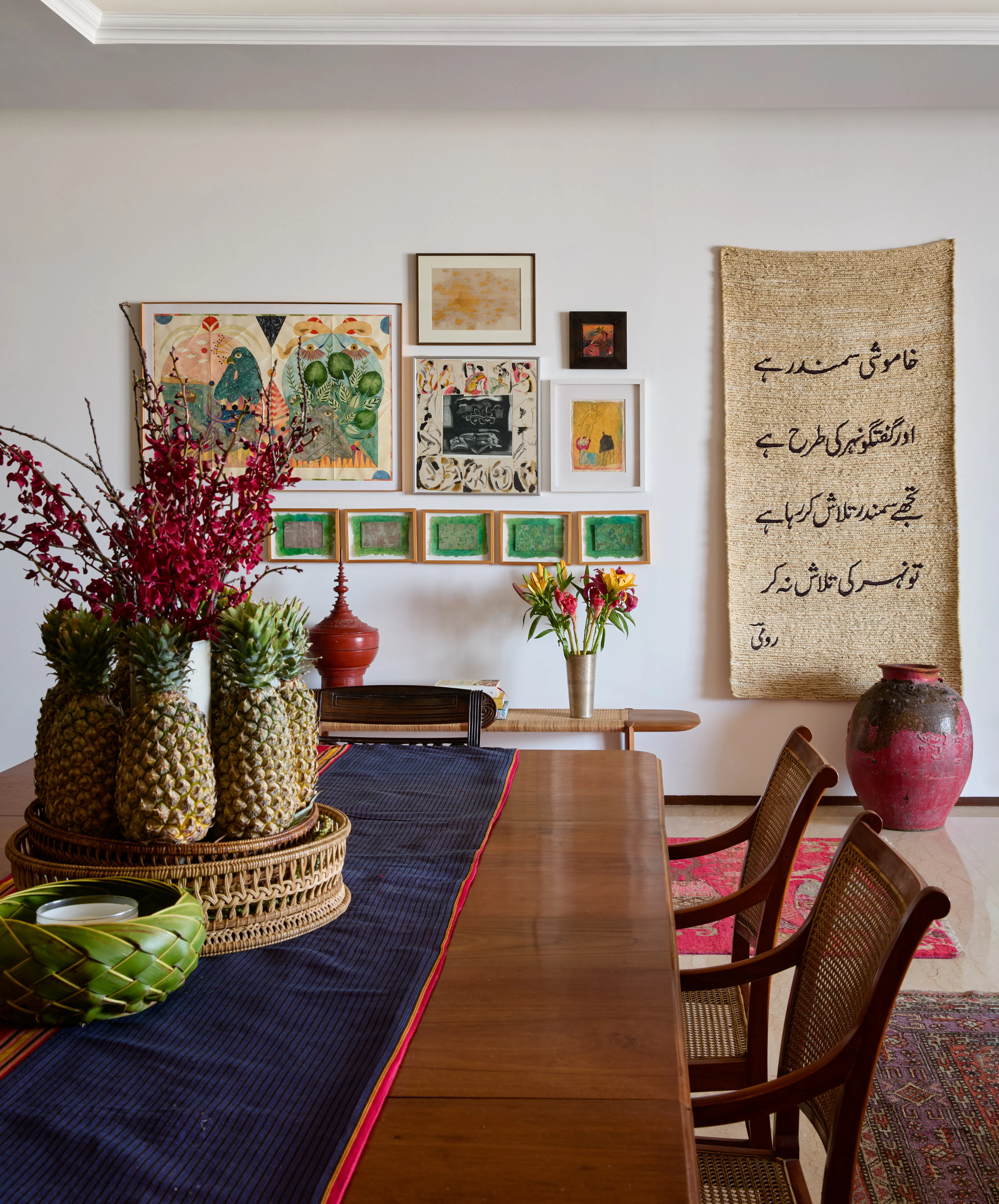
This corner of the dining/living area holds a cluster of artworks by Indian artists including Rithika Merchant, Dhara Mehrotra, Laxma Goud, Dhruvi Acharya, Arpita Singh, and Gopa Trivedi. The carpet on the wall is a gift designed by Ahsan Ansari and the distressed painted ceramic pot is from Ranji, Goa.
For Pavitra, textiles are living, breathing repositories of the stories we carry with us. Precious pieces of fabric gathered over decades of travel are used in surprising and stylish ways. A brilliantly coloured Ethiopian men's shawl runs along the centre of the aged teak dining table; vintage Suzanis spotlight the often-overlooked genius of women embroiderers; in one of the bedrooms, a patch of test fabric from a Japanese block-printing studio serves as a one-of-a-kind throw. Grounding these diverse design stories are the Yarkandi carpets used in nearly every room — distinctive for their rendering of natural motifs in elegant geometric patterns.
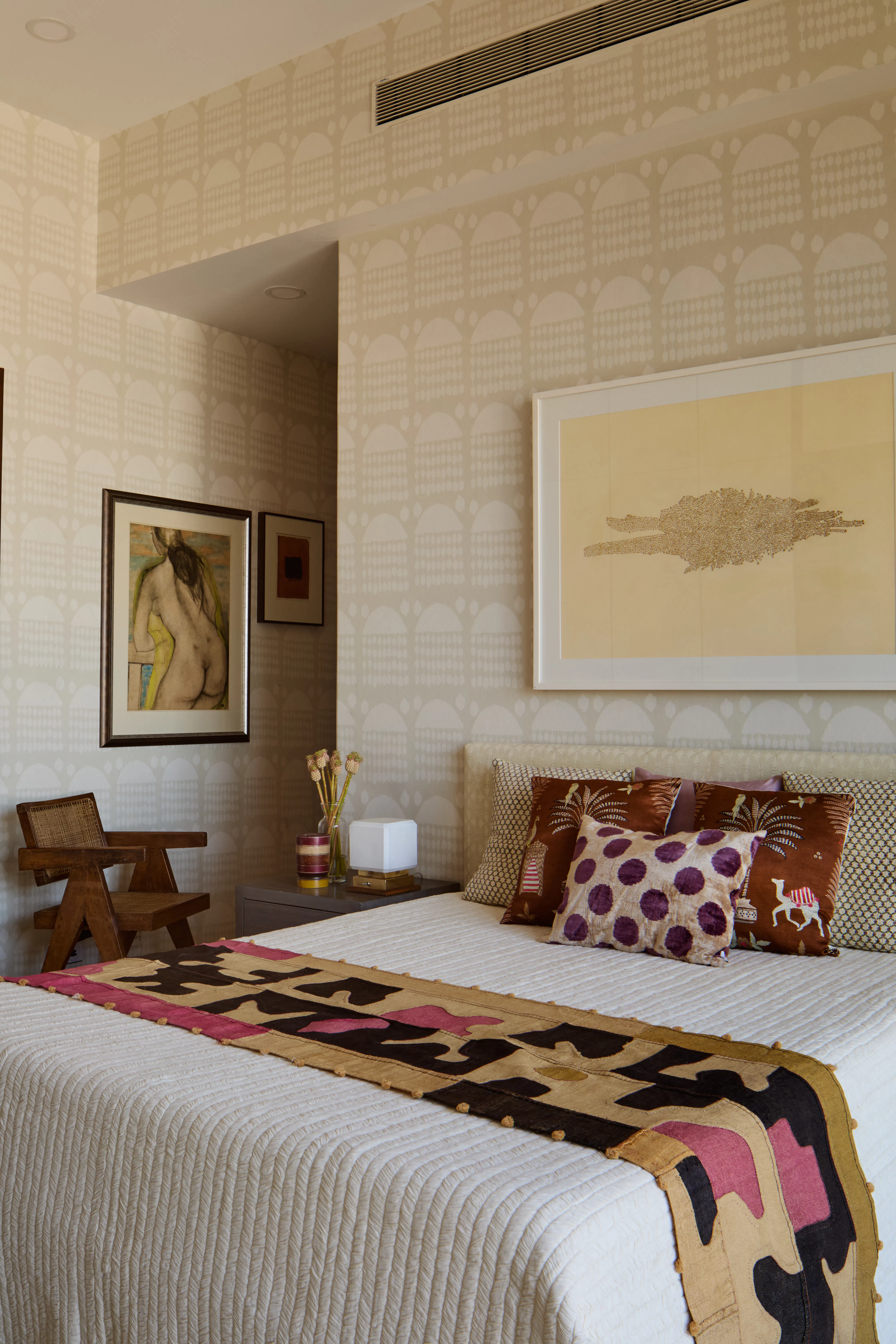
The Khiva wallaper, from PRD's Caravane collection for Nilaya by Asian Paints sets an organic tone for the colours and textures in this bedroom. Among the irreplaceable pieces here are an original numbered Chandigarh chair by Pierre Jeanneret, and the art: Herschel’s Galaxy I by Desmond Lazaro and a nude by KH Ara. Pops of graphic colour are served by the polka dot cushion from Istanbul Grand Bazaar and the Congolese Raffia kuba cloth used as a throw.
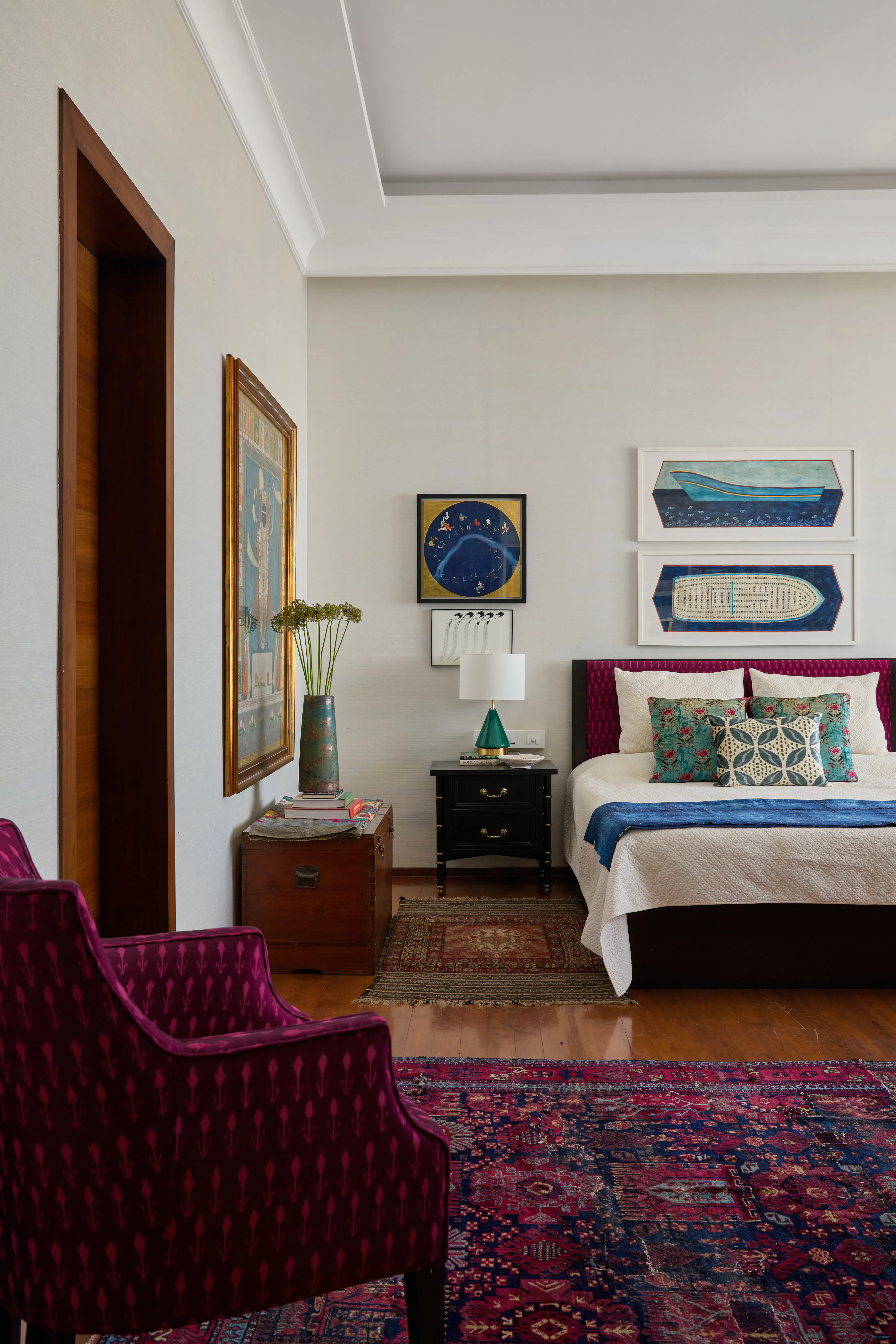
The master bedroom is covered by a natural grass cloth wallpaper (shade: Metallic Sisal) from Nilaya, allowing the deep and jewel-tone colours of the textiles to stand out. Among these are ikats (on headboard, chair and sofa) by master-weaver Chandpasha from Crafting Plant, a small Afghan kilim, an antique Bikaneri jali carpet and a bed-throw of vintage paste resist batik from Indonesia, part of Pavitra’s collection.
Classic textile art, motifs and traditions form the heart of each of the four bedrooms. Wrapped in textured grass cloth wallpaper, the master bedroom is an oasis with pools of deep blues and jewel pinks. The juicy contrasts of the ikat weaves find a cool counterpoint in the indigo throw, the turquoise of the Pichwai, and the oceanic tones of Rithika Merchant's Bateau 1 & 2.
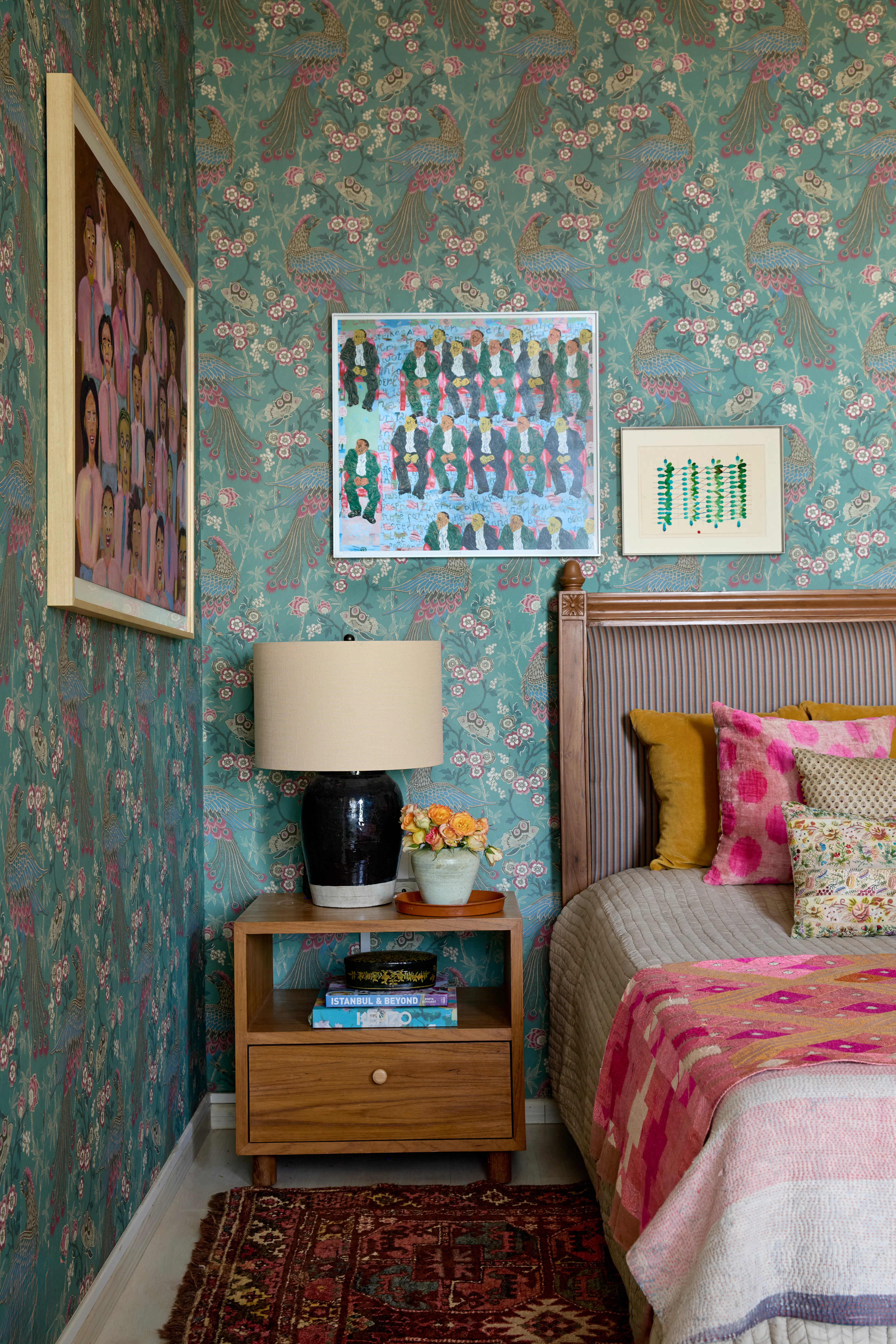
In another bedroom, ikat-inspired wallpaper and a block-printed headboard are in organic neutral tones, with drama arriving only through the colours of an African kuba cloth throw. The 'tiger bedroom' wears its stripes proudly with custom wallpaper in warm tones offset by earth-red wainscoting; the fourth bedroom draws from chinoiserie tradition, its hand-painted birds and flowers forming a heady backdrop for the provocative art of Arpita Singh and Amina Ahmed.
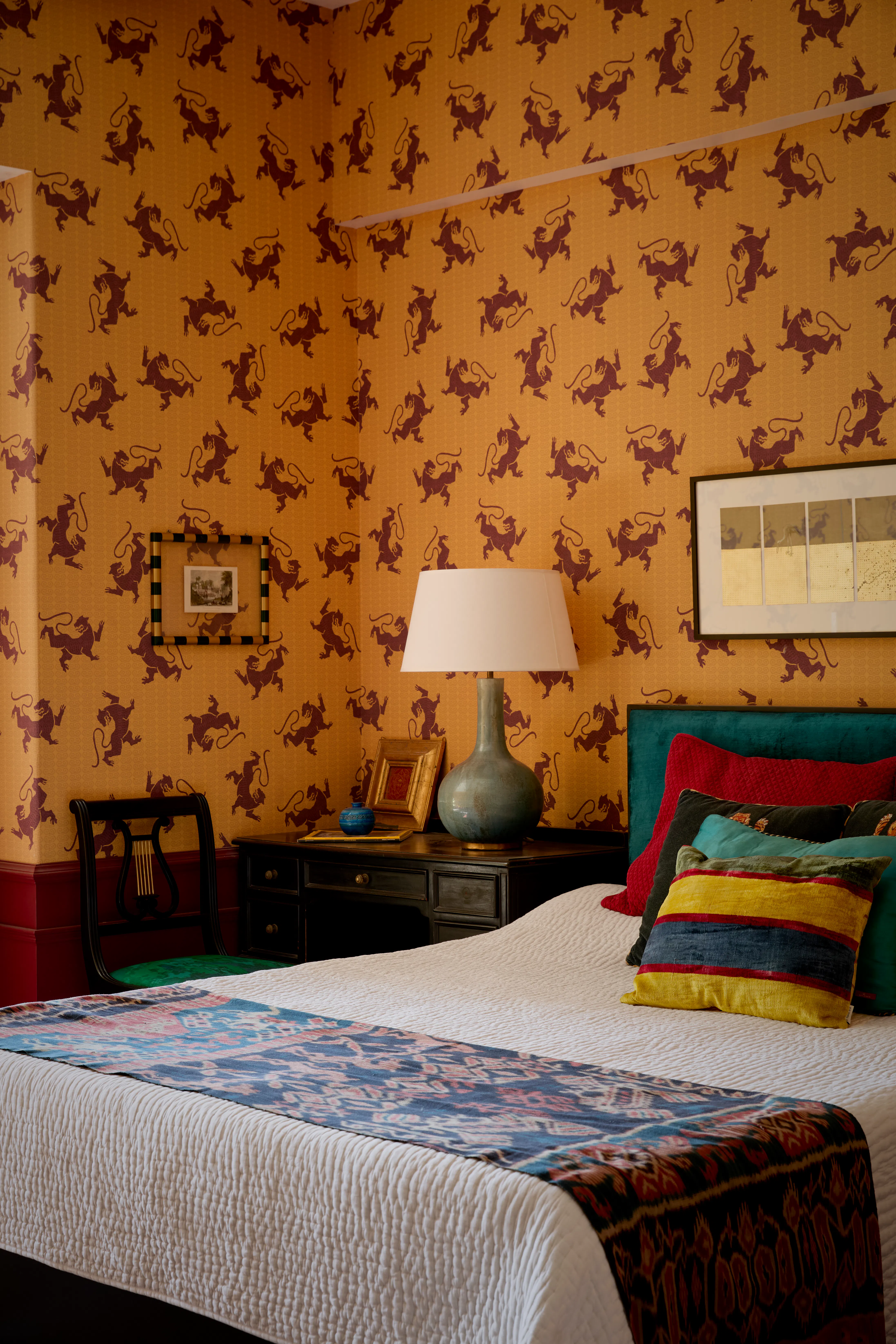
The ‘Odoru Tora’ wallpaper by PRD Studio sets the mood of the ‘tiger bedroom’, teamed with the broad wainscoting in ‘Milan Red’ from Asian Paints. Jethro Buck’s paintings—Slayer of Greed and Ways of Seeing Tigers—take the theme further. The headboard covered in blue velvet from Ascent Décor and the deep blues of the Indonesian Sumba ikat throw add another layer of contrast.
In another bedroom, textile and classic motifs steal the scene. From the Persia Songbird wallpaper in Aquamarine Mist, from PRD's Caravane collection for Nilaya by Asian Paints, to the handwoven mashru on the headboard from Paramparik Karigar to all the vintage textiles, including the Phulkari throw, the Parsi border cushions (Ranji, Goa), the kaantha throw (Embroidered Fabrics, Jaipur) and the kilim from Carpet Cellar, New Delhi.
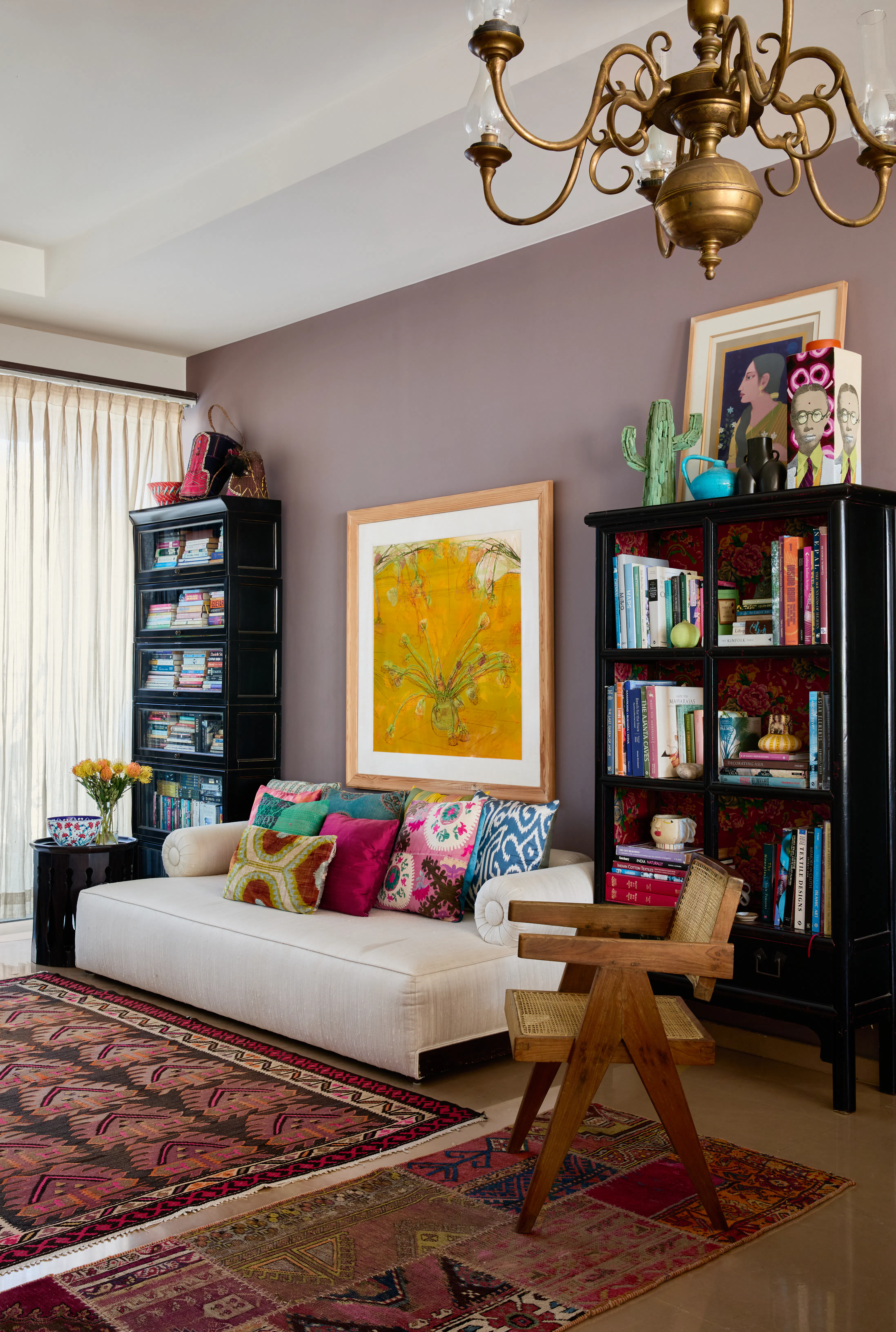
One floor above, the guesthouse is a more intimate space. The front door opens into a passage dominated by a Pichwai painting and leads directly to the dining table. One half of the living room is a formal seating area; above the custom leather sofa hangs the first painting Pavitra ever bought: an ethereal sketch of a mermaid by Badri Narayan. The other half is more inward-looking, anchored by a large takht piled with cushions and two well-stocked bookshelves within arm's reach. Tying both halves together is the romantic wall colour, Dhundh by Asian Paints, a stormy monsoon grey with just a blush of pink.
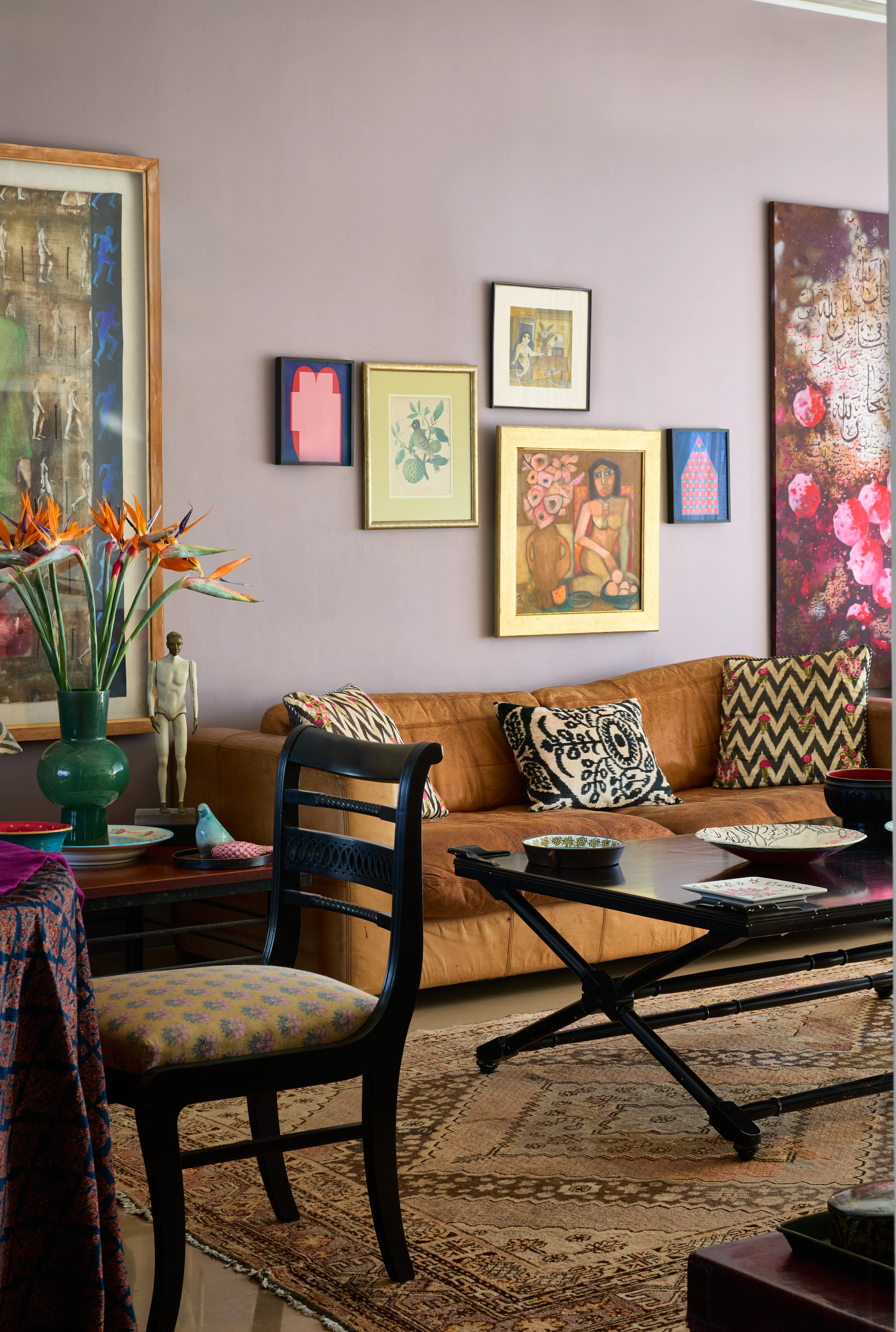
Art dominates this living room wall in the guesthouse, with two large works by Lubna Chowdhary (Code 9) and the pomegranate painting by Turkish artist Oktay Bozkurt bookending the selection above the leather sofa from Good Earth. A resin-and-brass statue from Raw Mango’s 10th anniversary collection adds a point of interest to the side table.
The tops of bookshelves here hold works of fine craftsmanship, including woven Naga baskets, a black Morrocan vase, a hand-painted ceramic jar from Chiang Mai and a cactus figurine from The Conran Shop in London. A large untitled painting by V Ramesh gives the space a serene quality.
The bedrooms here are equally considered. In the master bedroom, patterns are layered upon patterns - a Jamshed Jamewar striped wallpaper by Sabyasachi for Asian Paints, a Pichwai in restrained colours, an heirloom sari on the headboard, a Suzani as a throw - but the final effect is one of serene harmony.
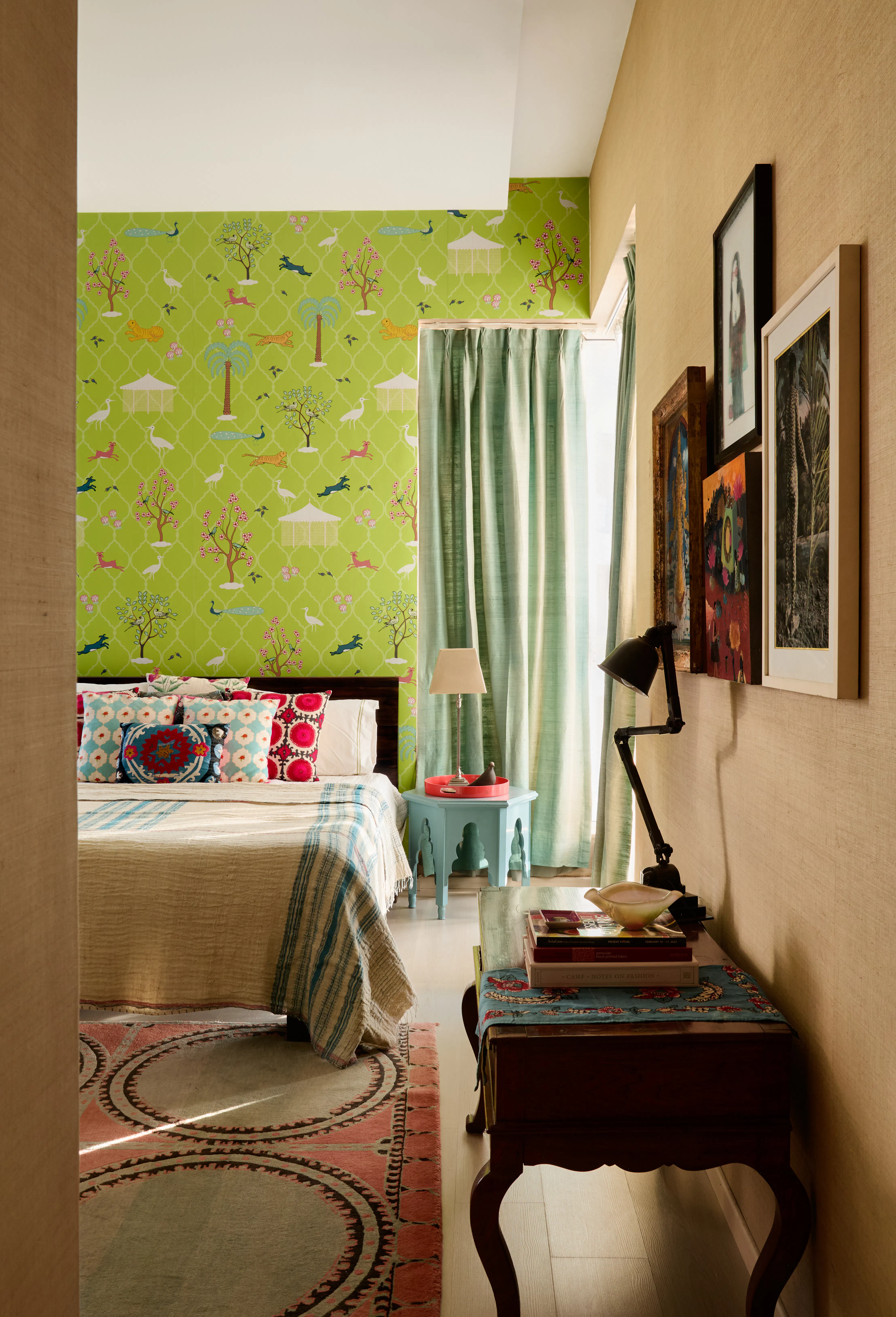
In the other bedroom, a classic Mughal hunt scene wallpaper, one of Pavitra's own early designs, sends antelopes, tigers and peacocks leaping across a green background. Surprising details accumulate quietly around it: a bhujodi textile on the bed, pale green silk curtains, contemporary art above a handsome, antique wooden desk.
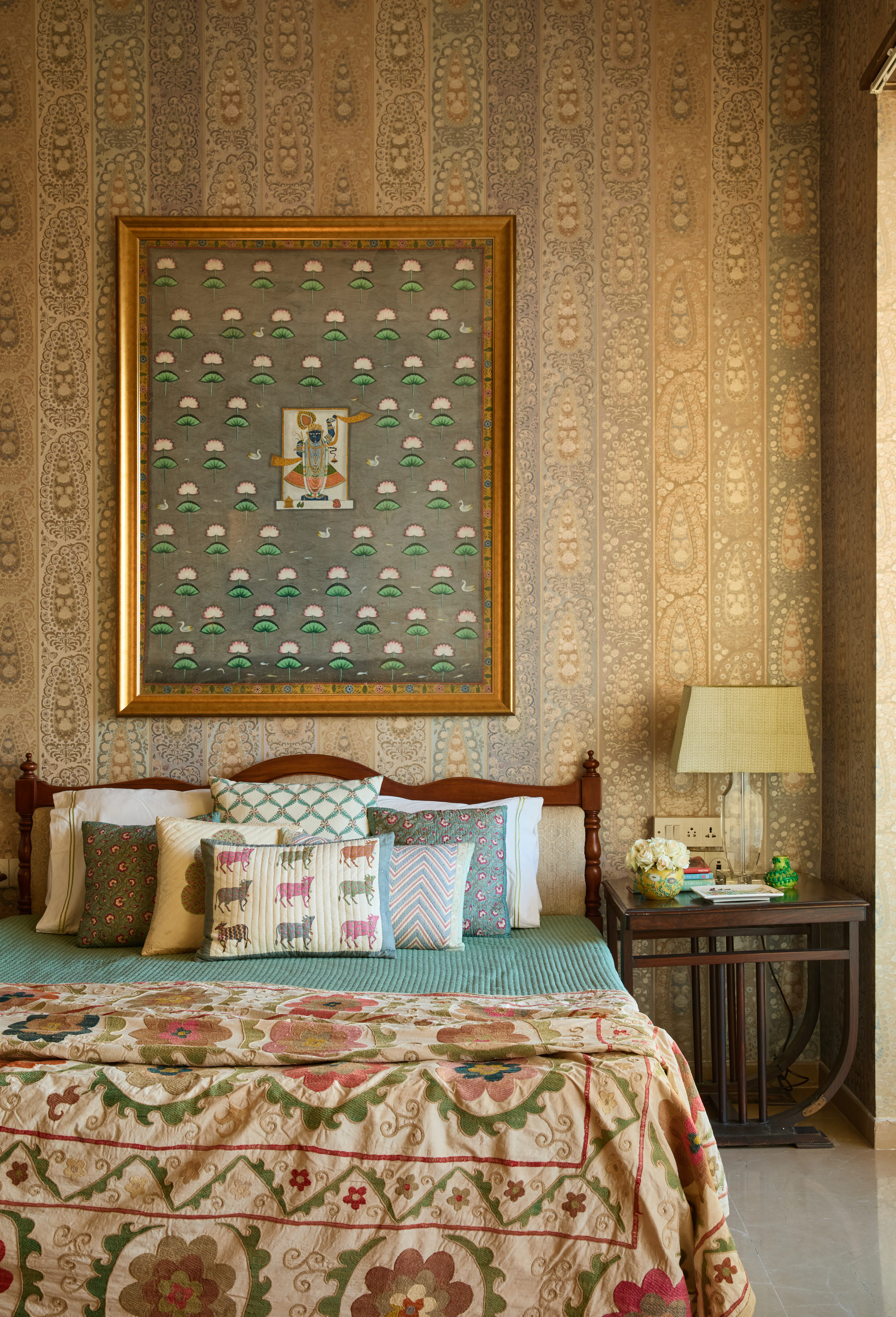
The guesthouse master bedroom has some special vintage pieces, like the Suzani used as a bed throw and the Art Deco side-table from Pavitra’s ancestral home. The bed is warm and inviting with block-printed cushions from Good Earth heaped on a textured bed cover from Sarita Handa.
Something old, something new. The rhyme, it turns out, was never really about weddings. It was about the art of making a home from everything you are: the inherited and the discovered, the loved and the sacred.
PHOTOGRAPHY BY
Talib Chitalwala