3400 SQFT | Mumbai
2025
Sarmaya Arts Foundation
3400 SQFT | Mumbai
2025
Sarmaya Arts Foundation
“Where history emerges into the sunlight”
History isn't a fixed point or space that you visit when you're feeling nostalgic. History is all around us; it's the water we swim in, our past the medium in which our present is held. That was always the promise of the Sarmaya Arts Foundation, which used creative and digital avenues to bring its collection of arts and artefacts to diverse Indian audiences. What began in 2015 as an online archive with a mission to be 'The Museum Without Boundaries' is today housed in a heritage space with a history all its own, in the heart of Mumbai's art district.
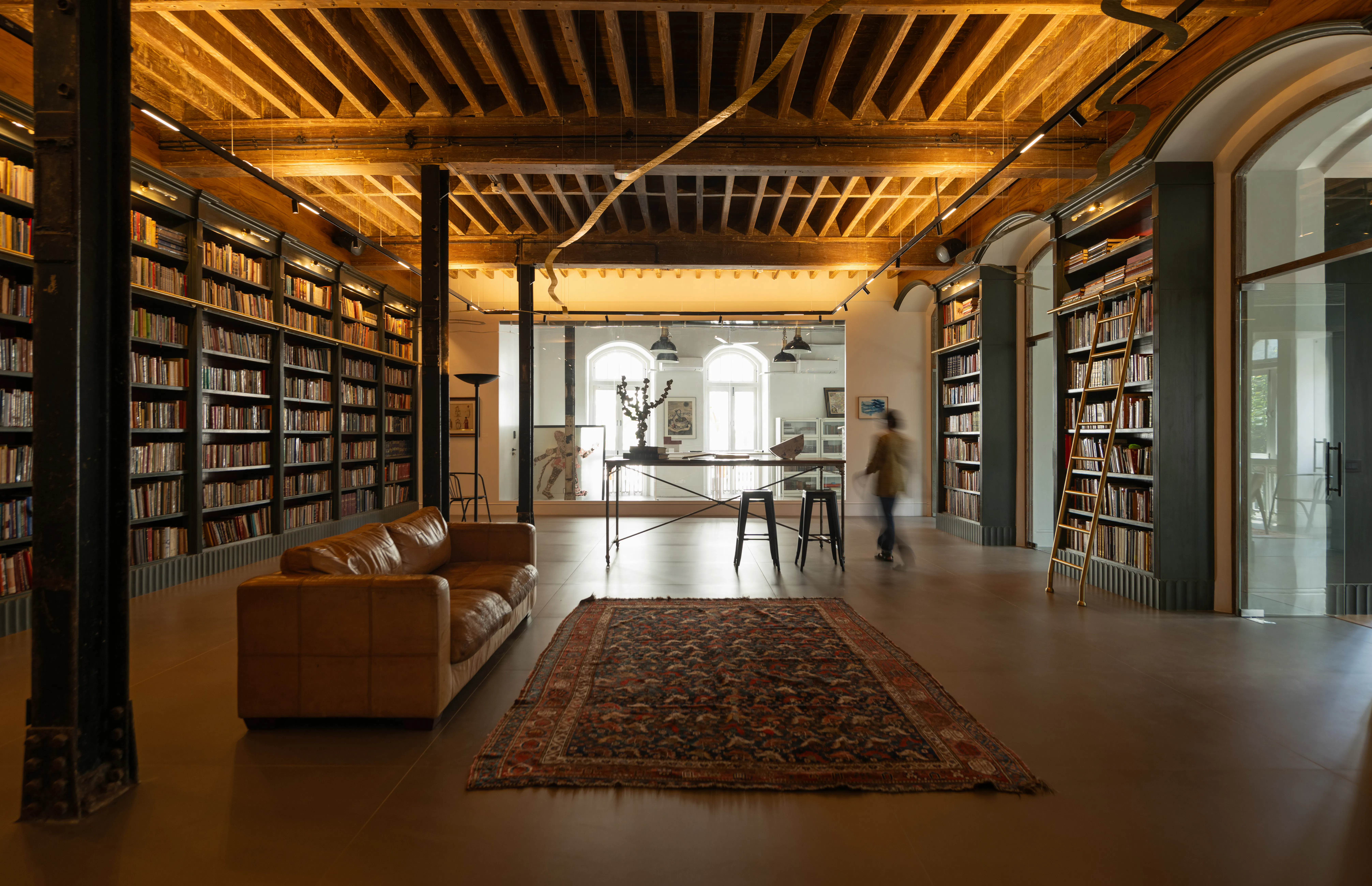
Inspired by the communal Indian courtyard, the central auditorium or hall is designed for intimate gatherings and quiet hours of research. Suspended from wooden rafters is the pièce de résistance: a hand-beaten brass installation tracing the coastline of the Indian peninsula, a porous border that has welcomed people, cultures and ideas for centuries.
The 150-year-old Lawrence & Mayo building sits on one of the city's oldest thoroughfares, Dr DN Road. Like many landmarks of the era, it's Neo-Classical down to its bones, with arched walkways, lofty windows and a pleasing geometry to its facade. Two domes were added to the roof later, a hat-tip to the Indo-Saracenic trend sweeping the city in the late 19th century.
Over the decades, however, the building, like many around it, fell into a state of benign neglect. PRD took over the restoration of the 3,400 sqft unit on the second floor that would become the Sarmaya archive: a project that was equal parts heritage conservation, architectural design and interiors.
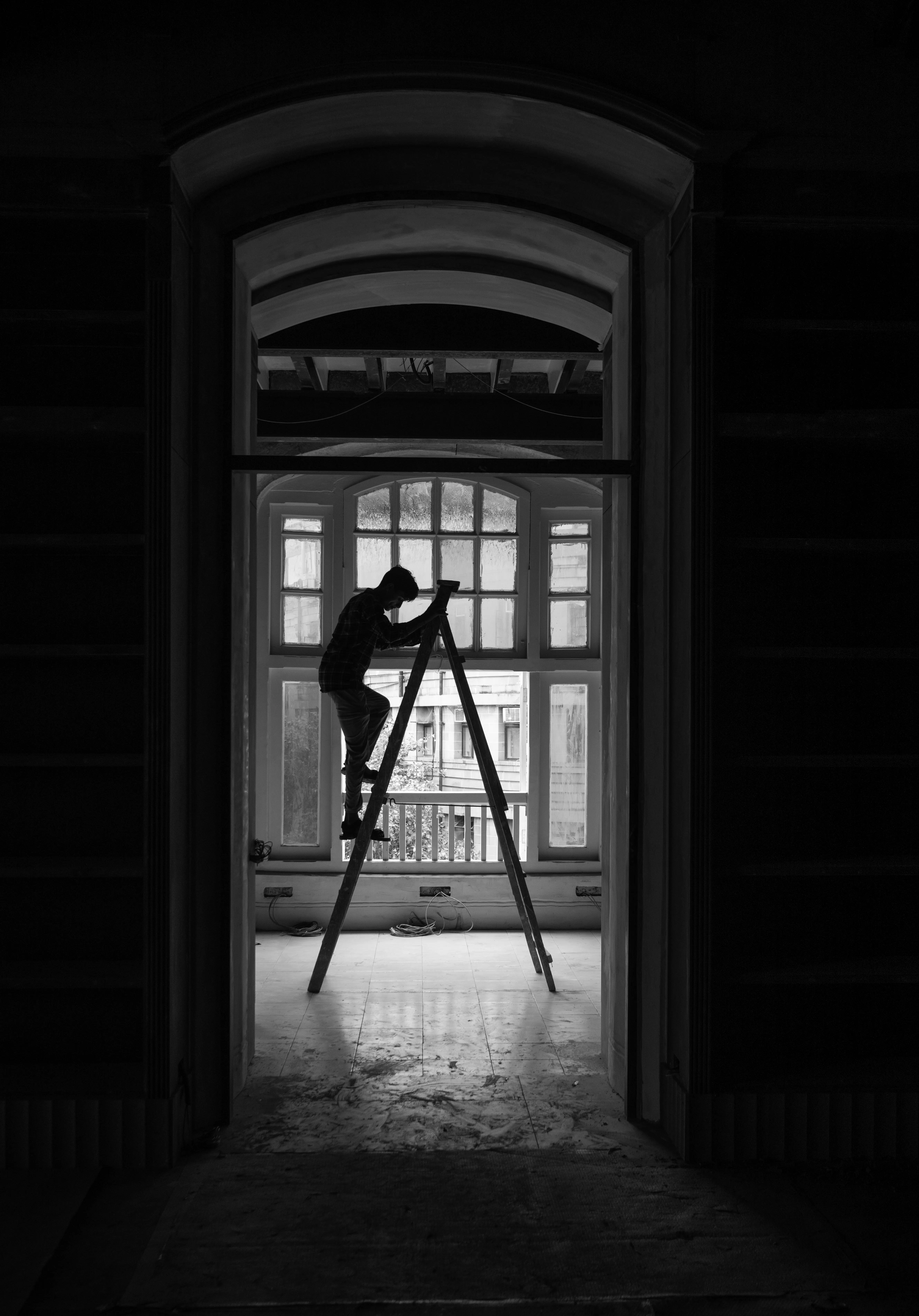
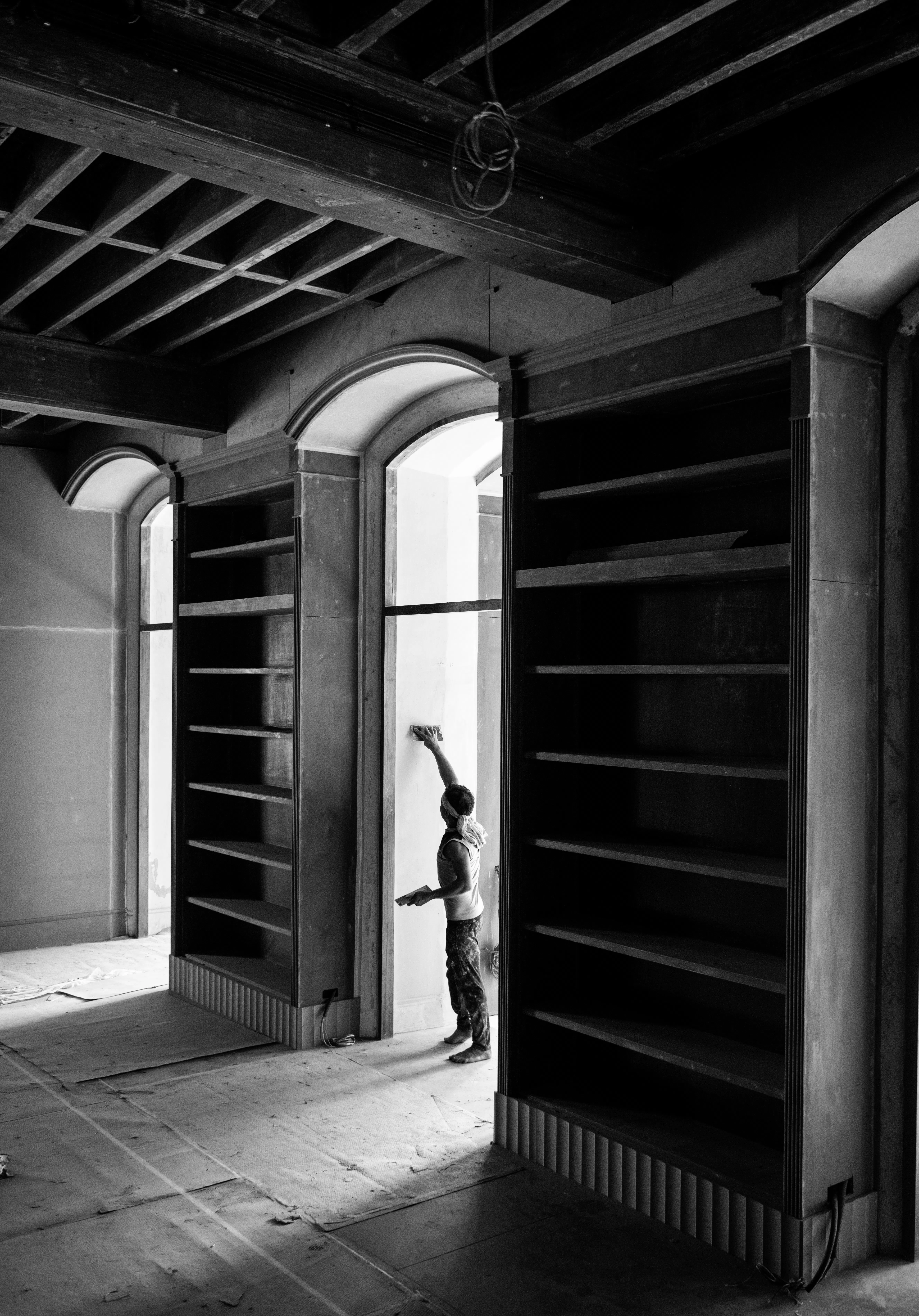
Carried out by skilled hands with simple tools and unhurried processes, the restoration work honoured the integrity of the original structure.
As it pivoted to being a more public-facing institution, the Sarmaya archive needed to do many things at once: house a state-of-the-art storage vault for artworks; provide a restoration laboratory where experts could work on pieces requiring special attention; hold a library of fifteen thousand books on art, history and culture; offer a working area for the Foundation's team; a private office for the Founder; an informal zone for collaborators and visiting researchers; and a generous auditorium for exhibitions, talks and other micro-curated events that form the heart of Sarmaya's programming.
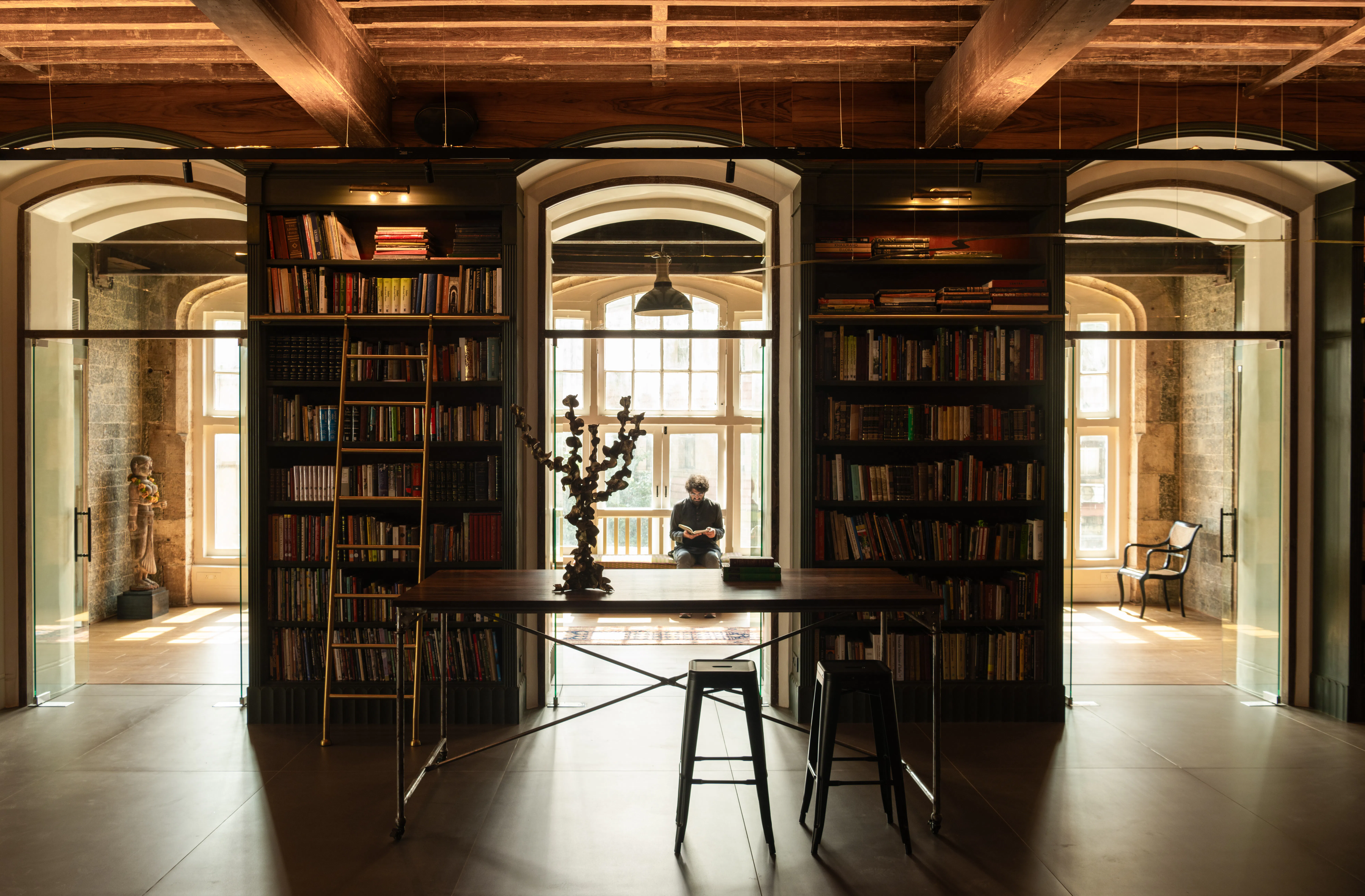
The floor-to-ceiling bookshelves that house the vast library also serve as architectural partitions, threading through the space from the storage vault to the auditorium and into the team work and collaborator areas beyond.
The design team's first order of business was an act of careful excavation: clearing the paint, debris and ersatz architectural modifications that had accumulated over the decades. A loft that had sliced the room's proportions was removed, restoring fourteen-foot ceilings to their original grandeur.
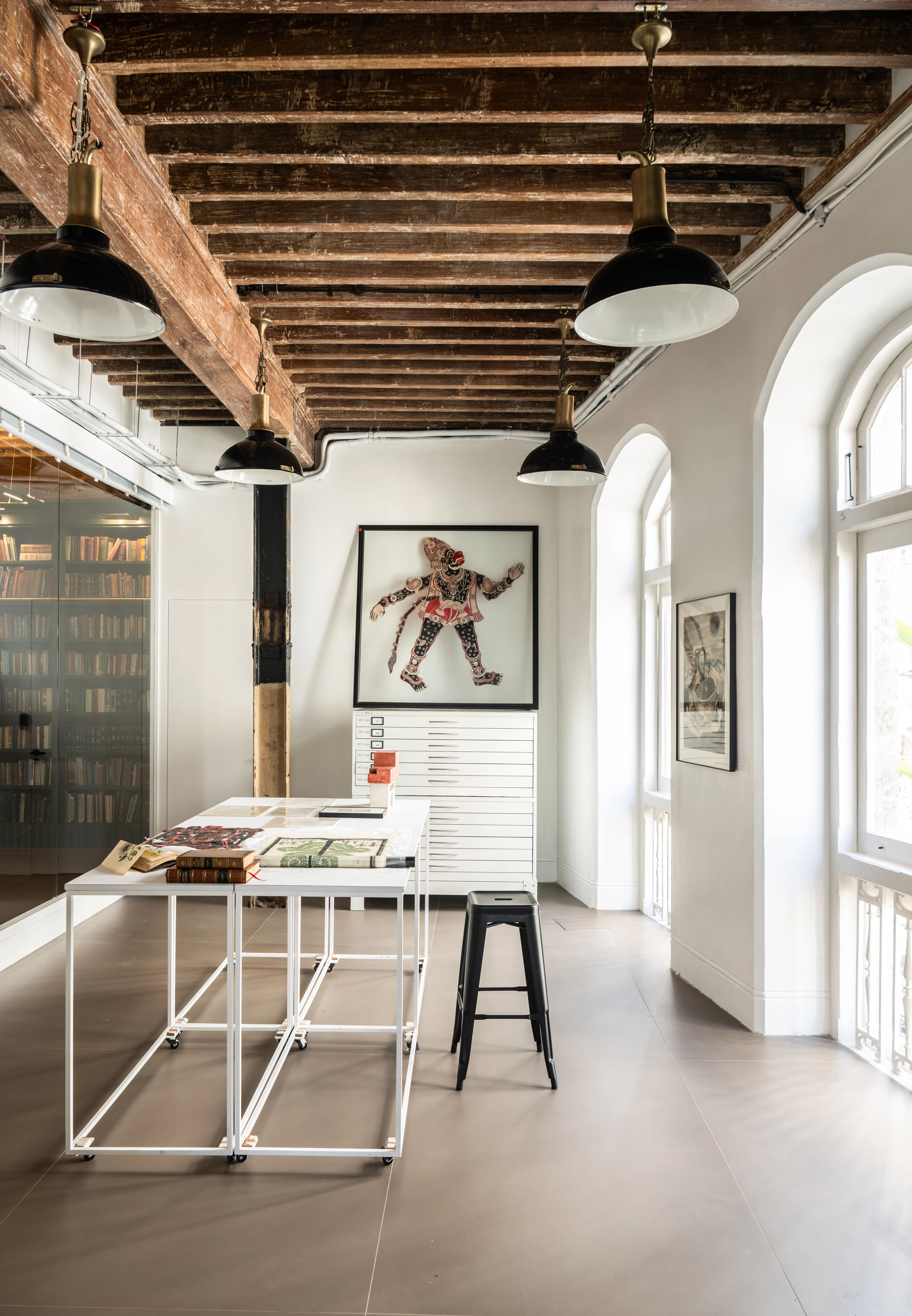
Arched windows that had been cut in half by earlier occupants were opened again, flooding the interior with soft eastern morning light that now filters into the heart of the archive. Then came the ceiling, peeled back layer by patient layer, until something extraordinary emerged: beams of superbly crafted and miraculously preserved Burma teak. These were maintained in their original state, the wood's fine grain and warm glow of age laid bare.
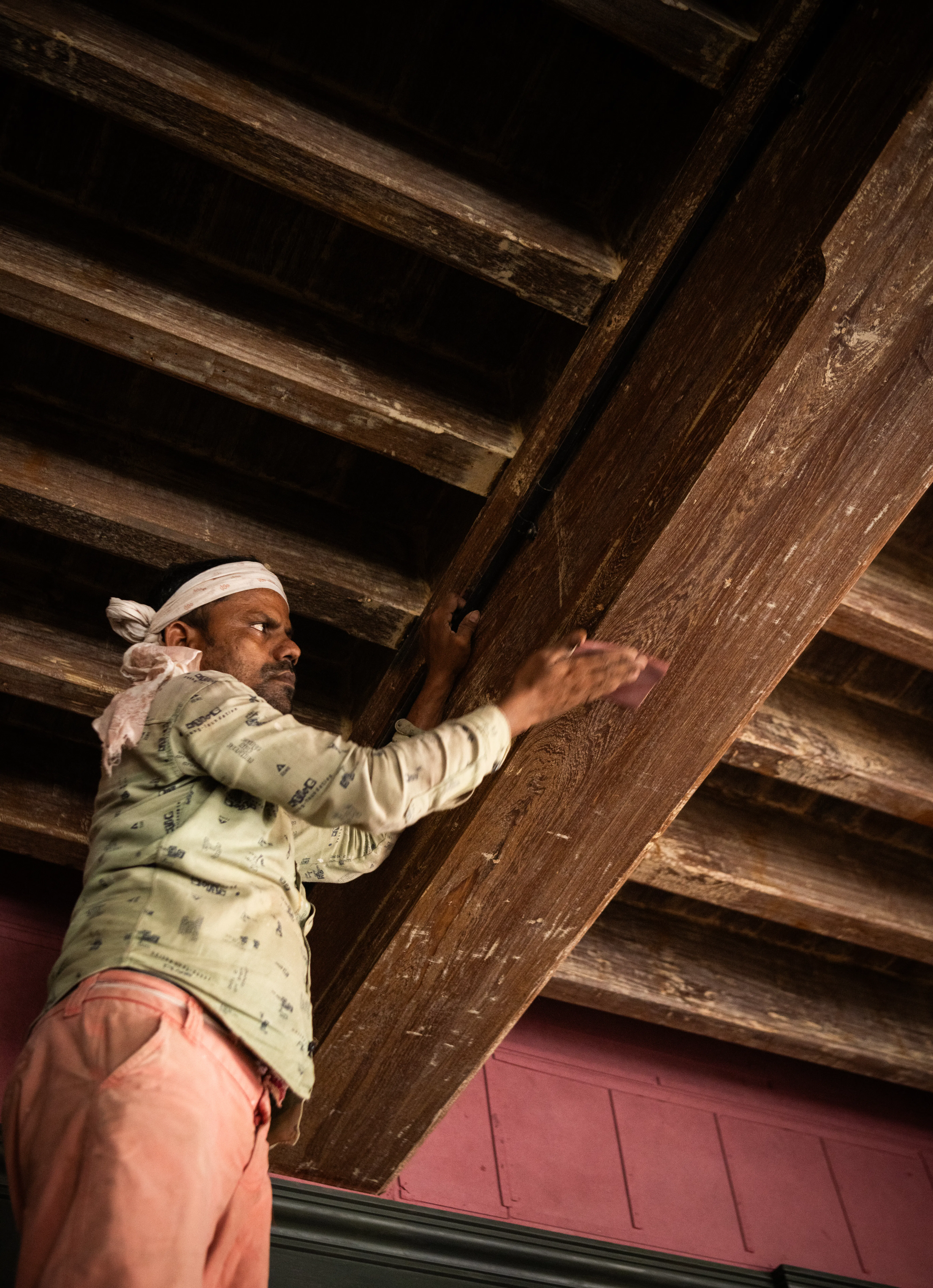
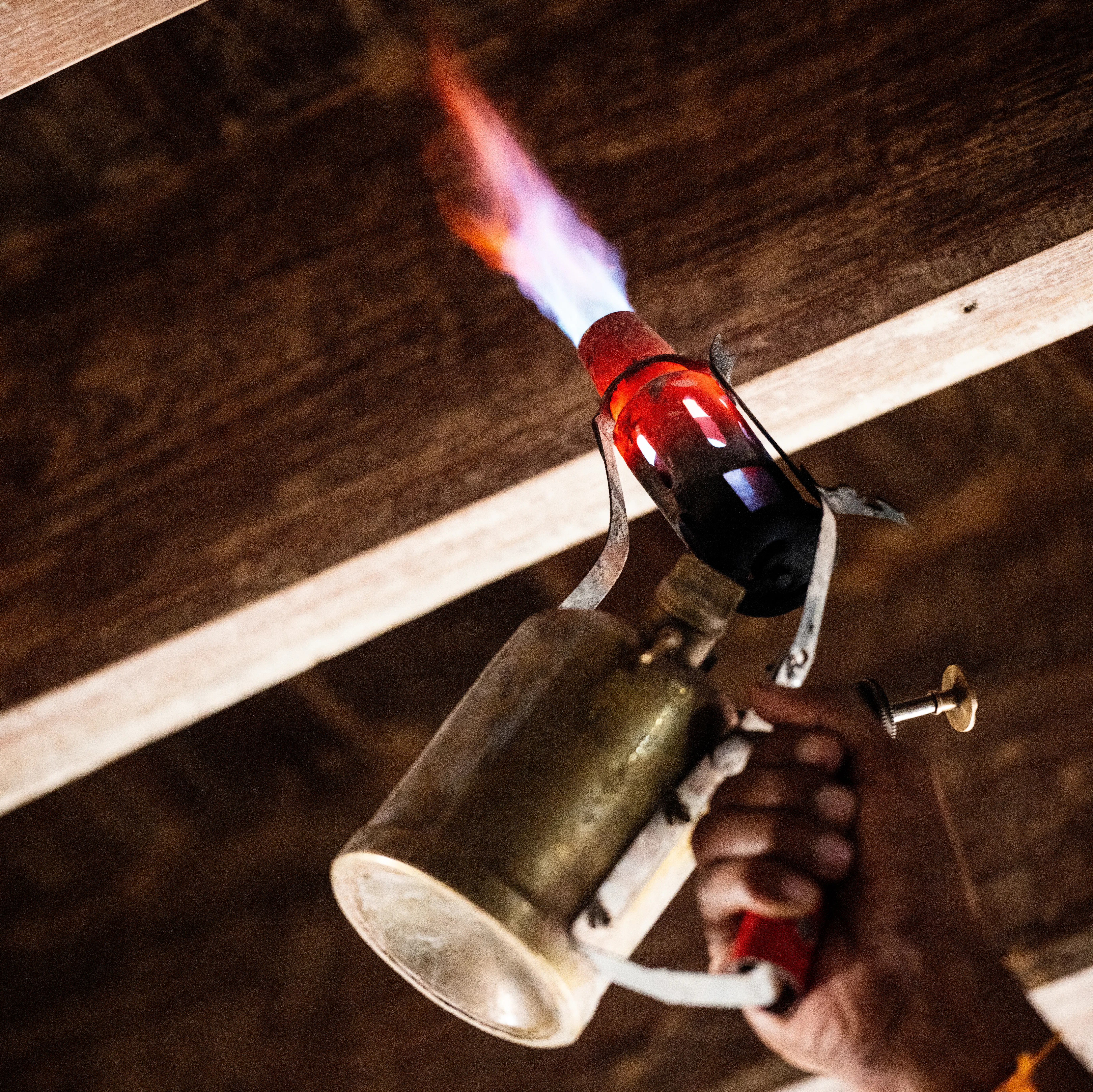
Layers of plaster and paint were painstakingly peeled back to reveal beautifully aged beams of Burmese teak. Once restored, they were left exposed to appreciate the natural grain and patina of the wood.
Another wondrous discovery was the original Maillard stone cladding on the walls, characteristic of Neo-Classical architecture in 19th-century Mumbai. The uncovering revealed that these craggy grey stones, unearthed from a quarry not far from the city, had been arranged to create simple patterns. All the restoration was done painstakingly by hand, using simple tools to retain the original character, patina and grain of the natural materials.
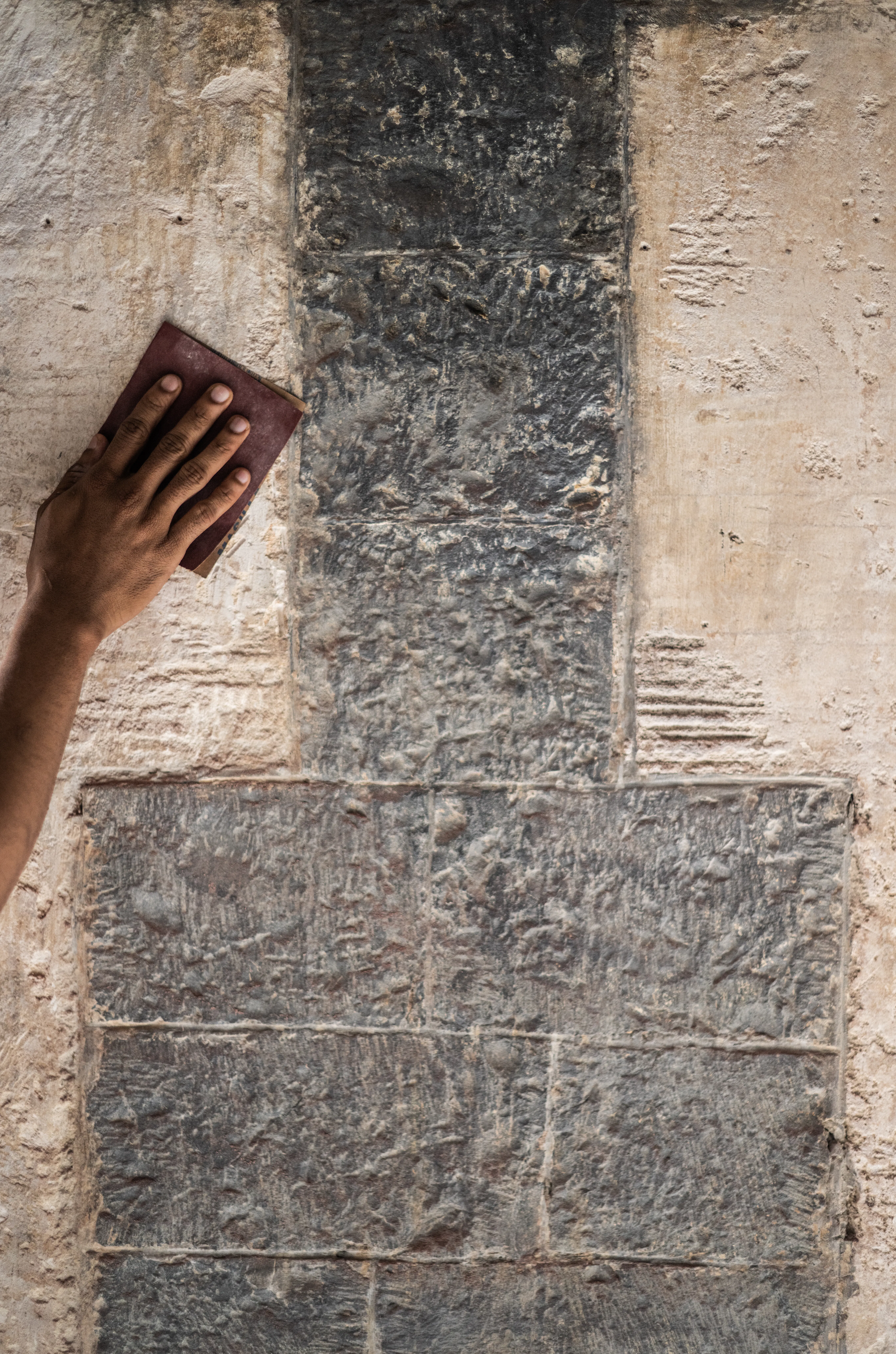
The grey Maillard stone banding running inside and on the facade of the building was unearthed by our team from under layers of plaster. Arranged in classic patterns, these stone walls brought all the drama that the space needed.
The architectural vision for the space was to stand back and let the walls speak. This minimal approach served another important purpose: accommodating Sarmaya's vast collection and growing library without creating visual clutter or a sense of overwhelm for the visitor. To achieve this, the design team returned to the mission of the organisation, The Museum Without Boundaries. The layout would be fluid, allowing greater versatility in how the space could be used.
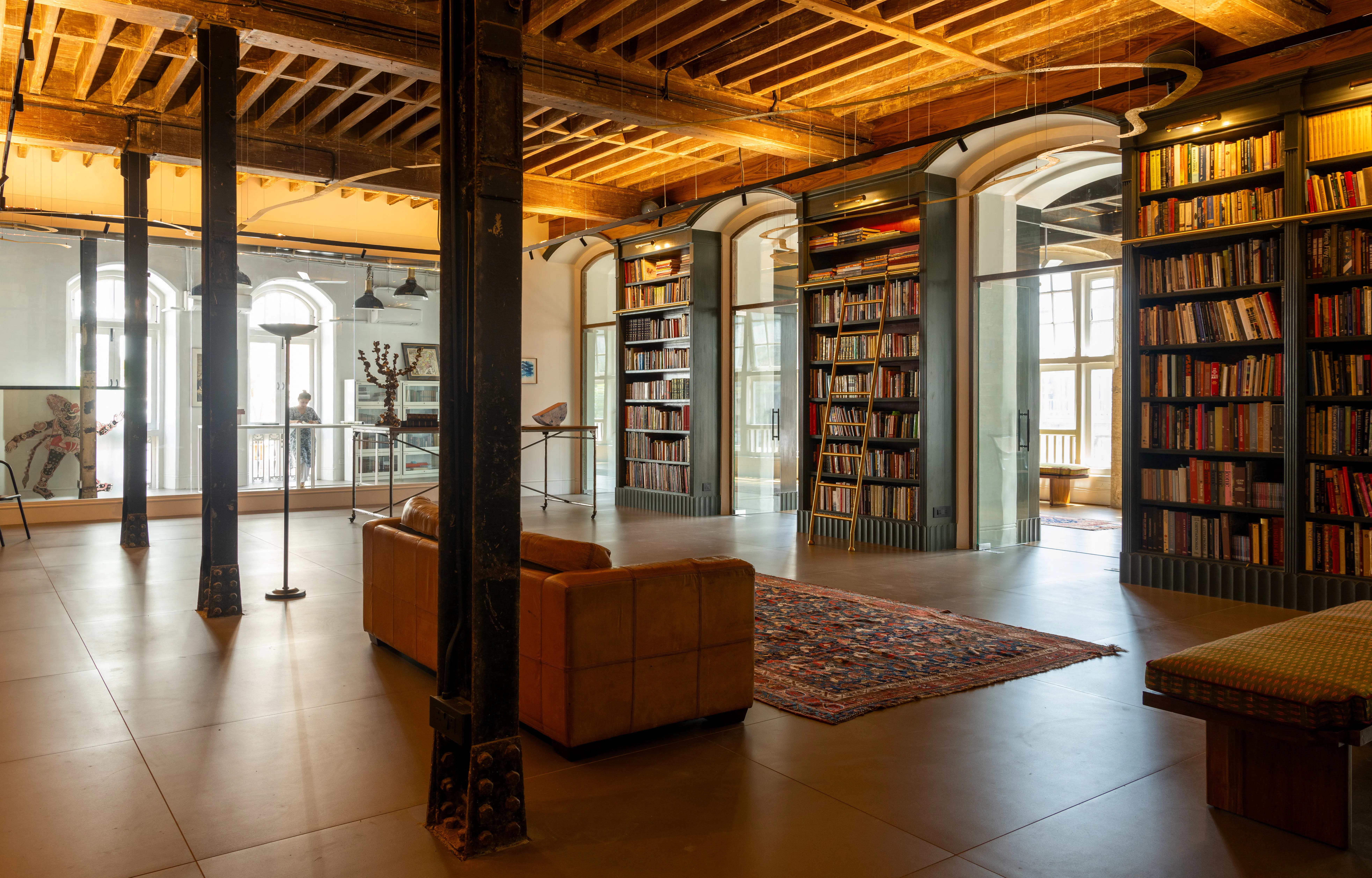
Another characteristic architectural style of this neighbourhood is Art Deco, elements of which we brought in through the fluting on the bookshelves. We kept the palette organic with deep tobacco for the tiles and an earthy green for the shelves. A leather sofa invites you to settle in with a book.
Inspired by the central courtyards around which many traditional Indian homes are built, PRD created an expansive auditorium at the heart of the archive where events and exhibitions could be hosted. On opposing ends are two floor-to-ceiling bookshelves, used not just for storage but as organisational devices, separating the storage vault from the auditorium, and the auditorium from the team work area.
Glass walls and doors were introduced to keep light moving through every corner. A glass partition across one wall of the central hall offers visitors a view into the inner workings of the archive: the 'lab' where archivists handle artworks and carry out all the tasks that go into caring for fragile historical objects.
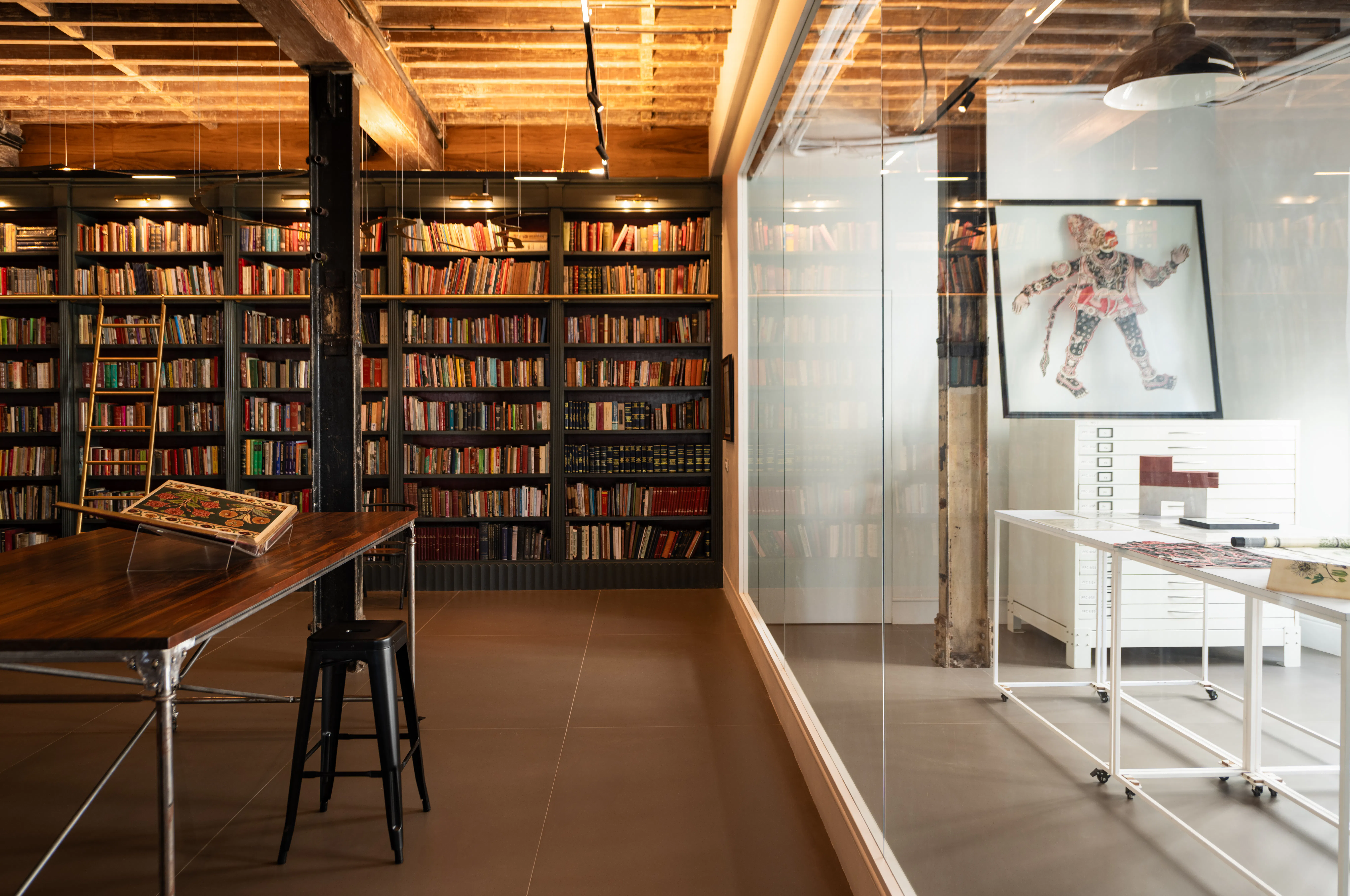
We used glass walls, partitions and doors to keep the sunlight streaming into nearly every corner of the archive. Industrial worktables on wheels allow for careful handling of the museum’s rare artefacts.
For the interiors, PRD proceeded with the same calibrated restraint. The floors are a smoky neutral, vitrified tiles in a tobacco tone, except in the team work area, where a warm teak-hued wooden floor complements the charcoal of the exposed Maillard stone walls. Elsewhere, the walls are kept a brilliant white to reflect the abundant sunlight that flows in all day. The bookshelves are stained a dark, mulchy green and lined with an earthy madder red, Sarmaya's signature colour. Just a hidden flash of the familiar, a wink to those who know.
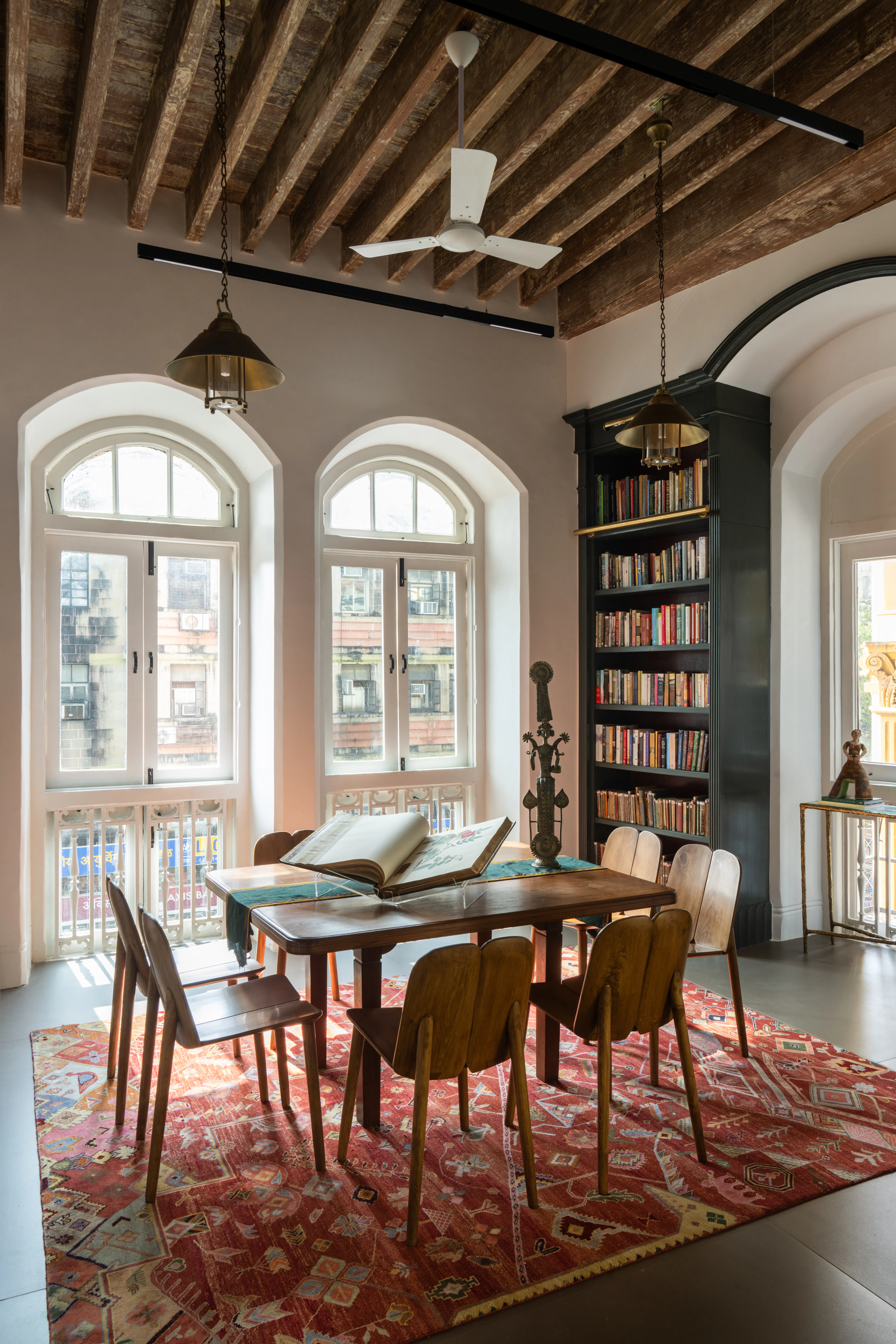
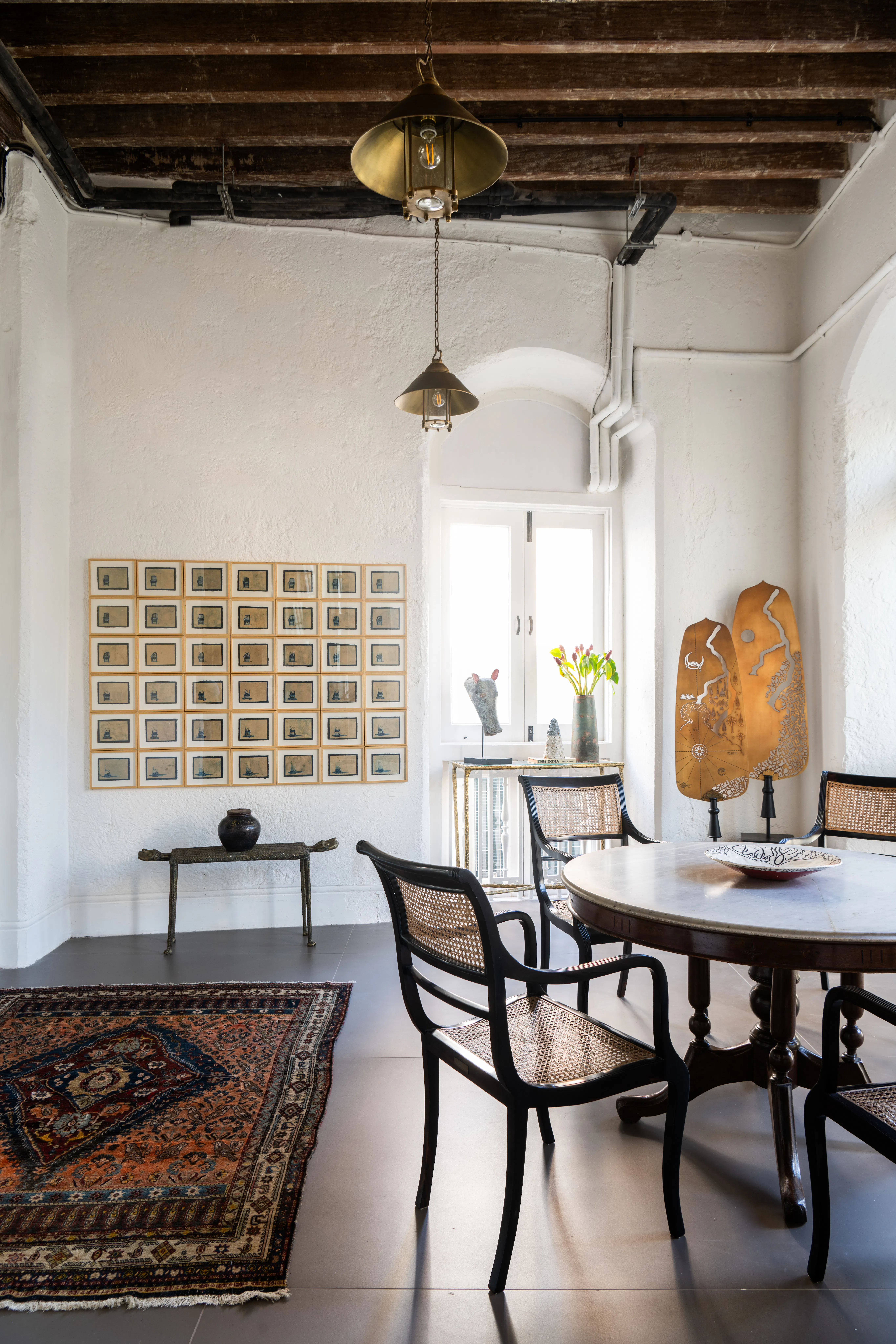
The loft put in by the previous occupants was removed to restore the 14-foot ceiling and reveal the graceful arches of the windows.
In the Founder’s office, Dutch colonial chairs from the early 1900s are paired with a single-legged marble-topped Company-era table. The room, like the team workspace, gets an abundant stream of morning light.
The décor of the Sarmaya archive is a pastiche of influences spanning a century of design. The fluting on the bookshelves is an homage to Mumbai's once-thriving Art Deco scene. In the Founder's office, Dutch colonial chairs from the early 1900s are paired with a single-legged, marble-topped Company-style table. In the auditorium, a custom leather sofa from the PRD studio shares space with tall industrial worktables on wheels, perfect for showing objects that demand a closer look. In the informal collaborators' space, Scandinavian-inspired chairs from the 1970s are grouped around a teakwood table from the 1950s.
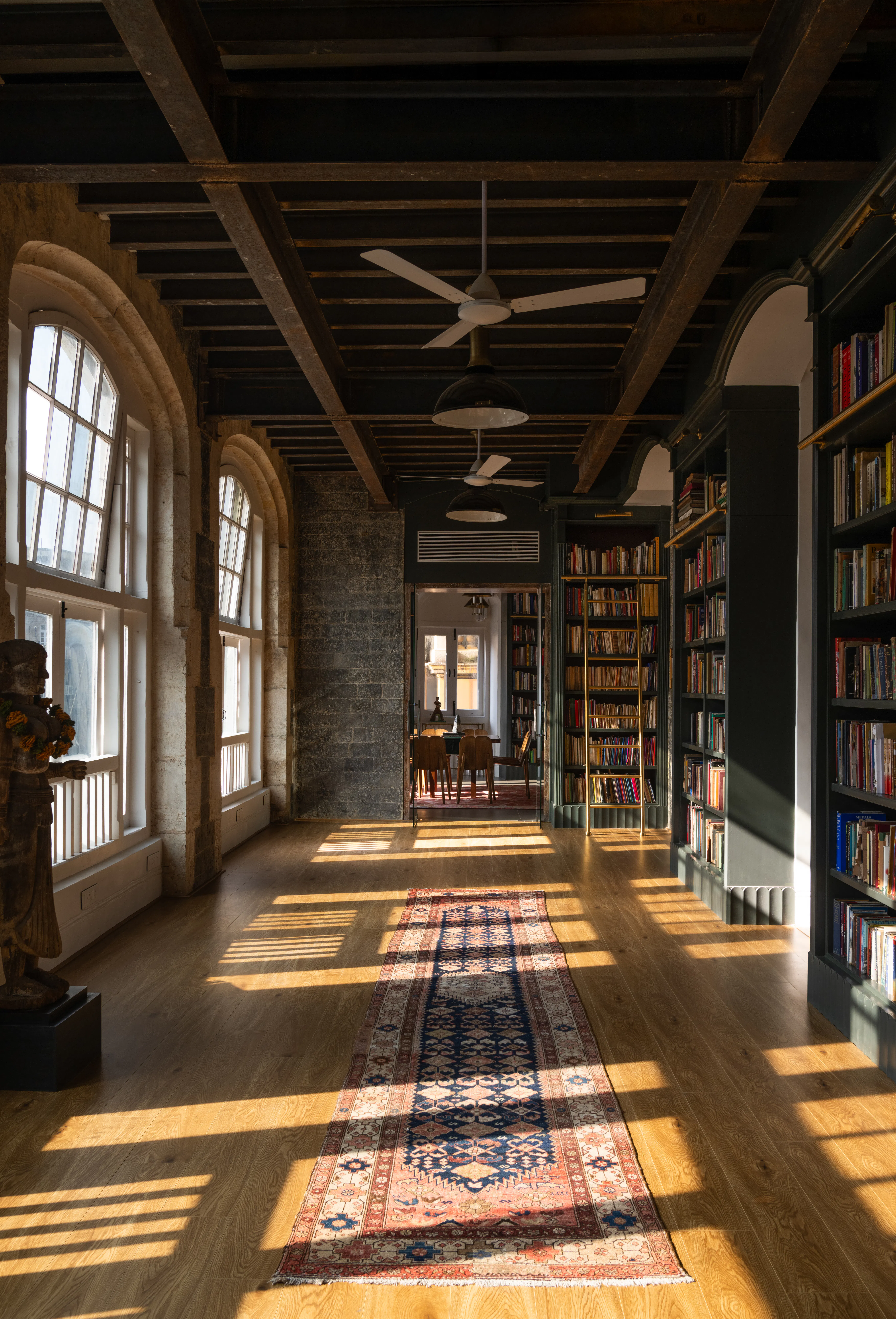
The team work area is an airy space with lots of light, plentiful bookcases and warm teak-toned flooring.
Sarmaya opened its doors in 2024 and has since stepped into its role as a space where diverse communities can engage with Indian art, culture and history at their own pace and in their own way. PRD has since designed three exhibitions and other intimate events micro-curated for small groups, allowing the archive to be used to its full potential, welcoming thousands into a space that had lain neglected for years. This project was a departure from the practice's usual work, but it also brought together the diverse areas of expertise in art, architecture and heritage conservation that define PRD.
Design is critical to how our heritage as Indians will be preserved and passed down. History isn't a fixed point, but we can create spaces for it to emerge into the sunlight and tell its stories to new generations of seekers.
PHOTOGRAPHY BY
Hashim Badani